
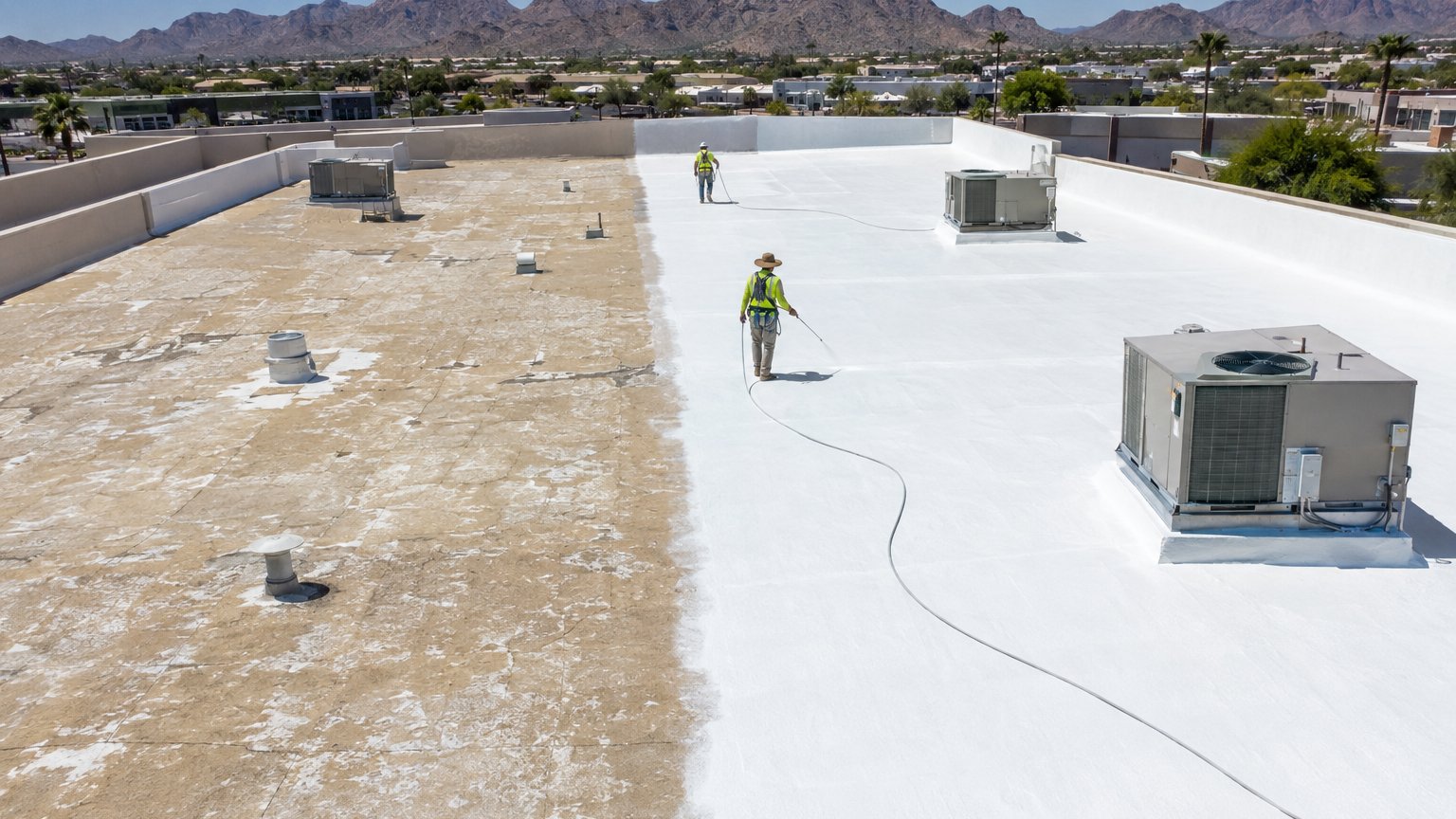
Restoration keeps the existing roof, repairs it, and coats it. Replacement tears it off to the deck. Phoenix heat, UV, and the monsoon, which the City of Phoenix lists as June 15 to September 30, wear out coatings on schedule. That does not mean the roof underneath is done.
The one-line answer: If the roof is mostly dry, structurally sound, and its problems are in specific spots, restoration is usually the better value. If water is spread through the roof, it is a replacement.
10 roof restoration vs replacement signs for Phoenix roofs
- The moisture survey comes back mostly dry. GAF’s silicone coating spec requires a moisture survey first and says wet areas must be removed and replaced. If more than 25% of the roof is wet, GAF says to consider reroofing.
- Wet spots are small and isolated. A few wet sections near a drain or curb get cut out and replaced, a prep step in GAF’s aged-TPO restoration sheet.
- Active failure covers less than 5% of the field. Blisters and splits under 5% get patched in prep, the same line in our replace vs recoat test.
- The coating is chalky or thin, not gone. That is normal wear. On foam, recoat now, before UV erodes the foam itself.
- Leaks trace to specific details. Leaks at HVAC curbs, pipes, or drains get rebuilt during restoration.
- Seams and flashings are mostly intact. A few open TPO seams is repair work. Seams failing roof-wide is a replacement sign.
- Water drains within 48 hours, or the low spots can be fixed first. NRCA defines ponding as water remaining more than 48 hours after rain. Low spots can be built up first.
- The deck is solid. No soft spots, rust-through, or sagging. A coating cannot fix a failed deck.
- The coating bonds to the existing surface. A field adhesion test with the planned coating should pass, or the coating will peel.
- You want the reflective surface back, and the roof has life left. A white coating brings back the reflective surface described in the DOE cool roof guide, as long as the roof is 3+ years from the end of its warranty life.
Roof restoration vs replacement Phoenix: signs side by side
For pricing on each path, see our replace vs recoat cost breakdown and commercial roof replacement cost guide.
How to check your own roof in 5 steps
Do the first four from safe roof access. The fifth decides roof restoration vs replacement in Phoenix and needs a roofer's equipment.
- Walk the roof after a rain. Photograph any water still standing 48 hours after rain.
- Map every leak. Mark each interior stain and look above it for curbs, pipes, drains, or seams.
- Check the surface. Look for chalking, exposed foam, blisters, open seams, and cracked flashings.
- Feel for soft spots. Note soft or sagging areas. They can mean wet insulation or a damaged deck.
- Order a moisture survey with core cuts. Have a roofer run an infrared or capacitance survey confirmed with core cuts.
Frequently asked questions
What is the difference between roof restoration vs replacement?
Restoration keeps the existing roof, replaces wet or damaged areas, repairs details, and adds a new coating system. Replacement tears the roof off to the deck. Restoration only works when most of the roof is dry and sound.
How much of a roof can be wet and still be restored?
Every wet area has to be removed and replaced before coating. GAF's coating specification says to consider other reroofing options if more than 25% of the roof is wet.
Can a leaking roof still be restored?
Often, yes, if the leaks trace to specific spots like HVAC curbs, pipes, drains, or a few seams. If water has spread through the insulation across large areas, replacement is usually the better call.
When is the best time to evaluate roof restoration vs replacement in Phoenix?
Spring and fall. A fall inspection after the monsoon, which runs June 15 to September 30 in Phoenix, shows what the storms did while there is time to plan.
Related reading
- Replace vs Recoat: A 5-Minute Decision Guide — the 6-point test and Phoenix cost math once you know restoration is on the table
- Silicone vs Acrylic vs Polyurethane Coatings — which coating to specify for a Phoenix restoration
- Foam Roof Replacement Warning Signs — the other side of the decision, when a foam roof is past restoring
- Ponding Water on Commercial Roofs — how to fix drainage before a restoration