
Commercial Roofing
TPO Roofing
Thermoplastic Polyolefin single-ply roofing — one of the most popular and cost-effective commercial flat roofing systems in Arizona. Heat-welded seams, superior UV resistance, and long-term energy efficiency.
What Is TPO?
Thermoplastic Polyolefin — Modern Single-Ply Performance
TPO (Thermoplastic Polyolefin) is a single-ply roofing membrane made from a blend of polypropylene and ethylene-propylene rubber. It combines the durability of EPDM rubber with the heat-weldable seaming technology of PVC — delivering a roofing system that's both strong and cost-effective.
TPO's white or light-colored surface is highly reflective, qualifying most installations for ENERGY STAR ratings and Cool Roof credits. In Arizona's desert climate, this reflectivity translates to dramatically lower cooling loads and reduced energy bills for your commercial property.
- Heat-welded seams stronger than the membrane itself
- ENERGY STAR rated — highly reflective white surface
- UV, ozone, and chemical-resistant membrane
- Flexible in cold temperatures — won't become brittle
- Cost-effective — lower installed cost than PVC
Why TPO
Single-Ply Membrane Advantages
TPO is the fastest-growing commercial roofing system in the U.S. for good reason — it delivers a compelling combination of performance, energy efficiency, and value.
Heat-Welded Seams
Unlike EPDM, which relies on adhesive or tape-bonded seams that can fail over time, TPO membranes are joined with hot-air welding equipment. The seam is actually stronger than the surrounding membrane — creating a watertight bond that doesn't degrade with age or UV exposure.
Energy-Efficient Cool Roof
TPO's highly reflective white surface reflects solar radiation rather than absorbing it. In Arizona, where dark roofs can reach 170°F+, a white TPO membrane stays significantly cooler — reducing heat transfer into your building and cutting HVAC energy costs by 15–25% in peak summer months.
Ideal for Commercial Buildings
TPO is available in 10, 12, and 15-foot wide rolls, making it efficient to install on large commercial rooftops with minimal seams. It accommodates a variety of attachment methods — fully adhered, mechanically fastened, or ballasted — allowing the right system for each building's structural requirements.
Puncture Resistance & Chemical Limits
TPO's reinforced scrim gives it good puncture and tear resistance in foot-traffic areas. It is not the best choice for heavy grease exposure. GAF notes TPO can absorb greases and oils and recommends a sacrificial layer around grease traps, vents, and stacks. Versico calls PVC the most chemical-resistant single-ply membrane, especially against oil, grease, and animal fat. On restaurants and commercial kitchens, we look at PVC or KEE, a protective layer at exhaust zones, and grease containment before recommending TPO.
Our Process
TPO Roofing Installation Process
Roof Survey & Engineering
We measure and document your roof, assess drainage requirements, note all penetrations and curbs, and determine the optimal attachment method and membrane thickness for your building's specific needs.
Deck Preparation & Insulation
The existing roof is removed or repaired as needed. Polyisocyanurate (polyiso) or EPS insulation is installed to achieve the required R-value, followed by a coverboard to protect the insulation during installation.
TPO Membrane Installation
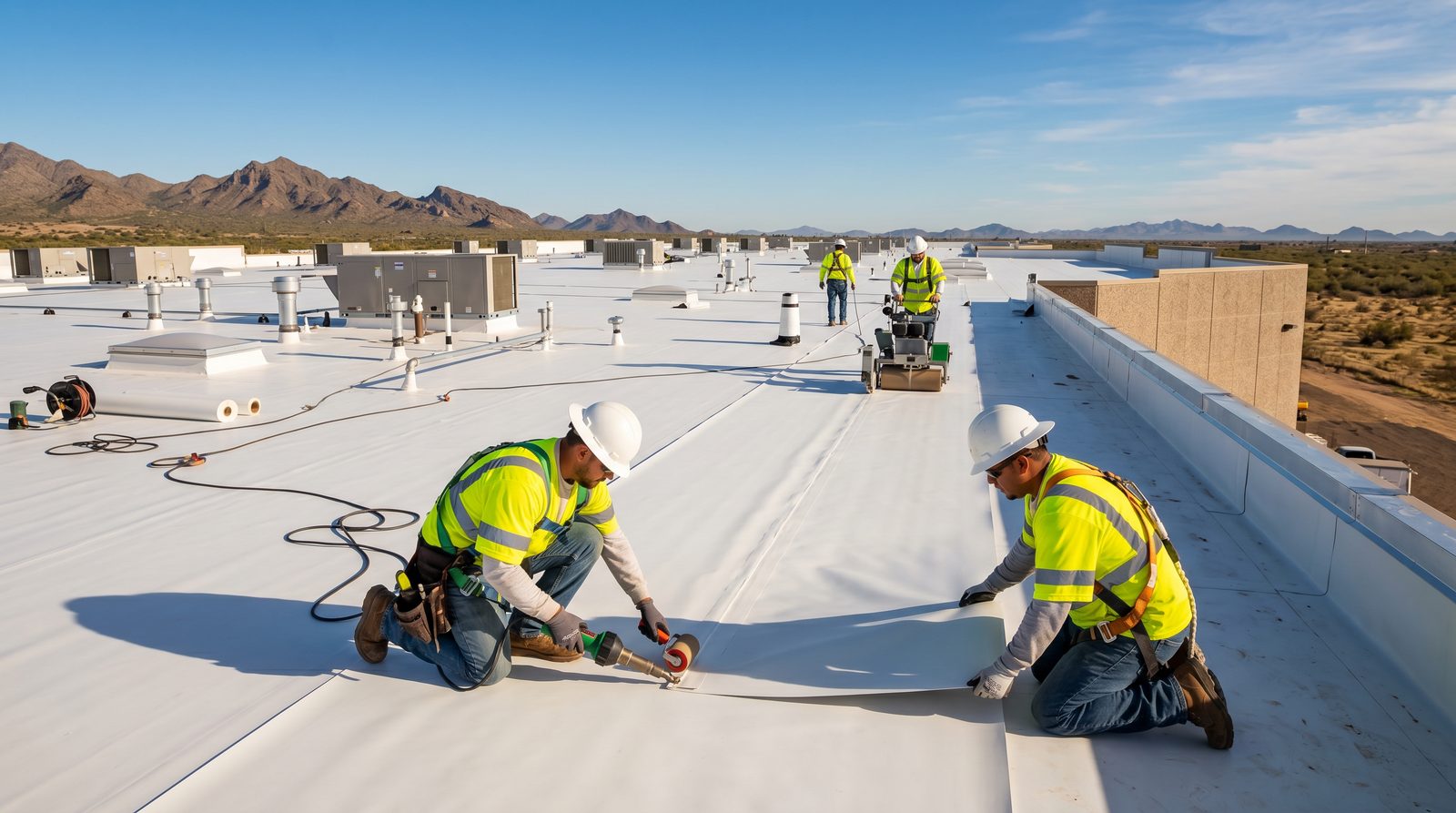
TPO rolls are laid out and positioned. Depending on the attachment method, the membrane is either adhered with bonding adhesive, mechanically fastened to the deck, or secured with ballast. Precise alignment ensures clean, professional seam lines.
Hot-Air Welding
All seams, laps, flashings, and terminations are hot-air welded using automated robotic welders for field seams and hand welders for detail work. Seam widths and temperatures are carefully controlled and verified for complete fusion.
Seam Probe Testing & Final Inspection
Every seam is probe-tested to verify adhesion. We walk the entire roof, verify all flashings and details, and provide manufacturer warranty documentation with your completed project file.
FAQ