
Commercial Roofing
Spray Foam Roofing
Arizona's most energy-efficient commercial roofing solution. Spray polyurethane foam delivers seamless waterproofing, exceptional insulation, and long-term performance in our extreme desert climate.
What Is SPF Roofing?
Spray Polyurethane Foam — Built for the Arizona Heat
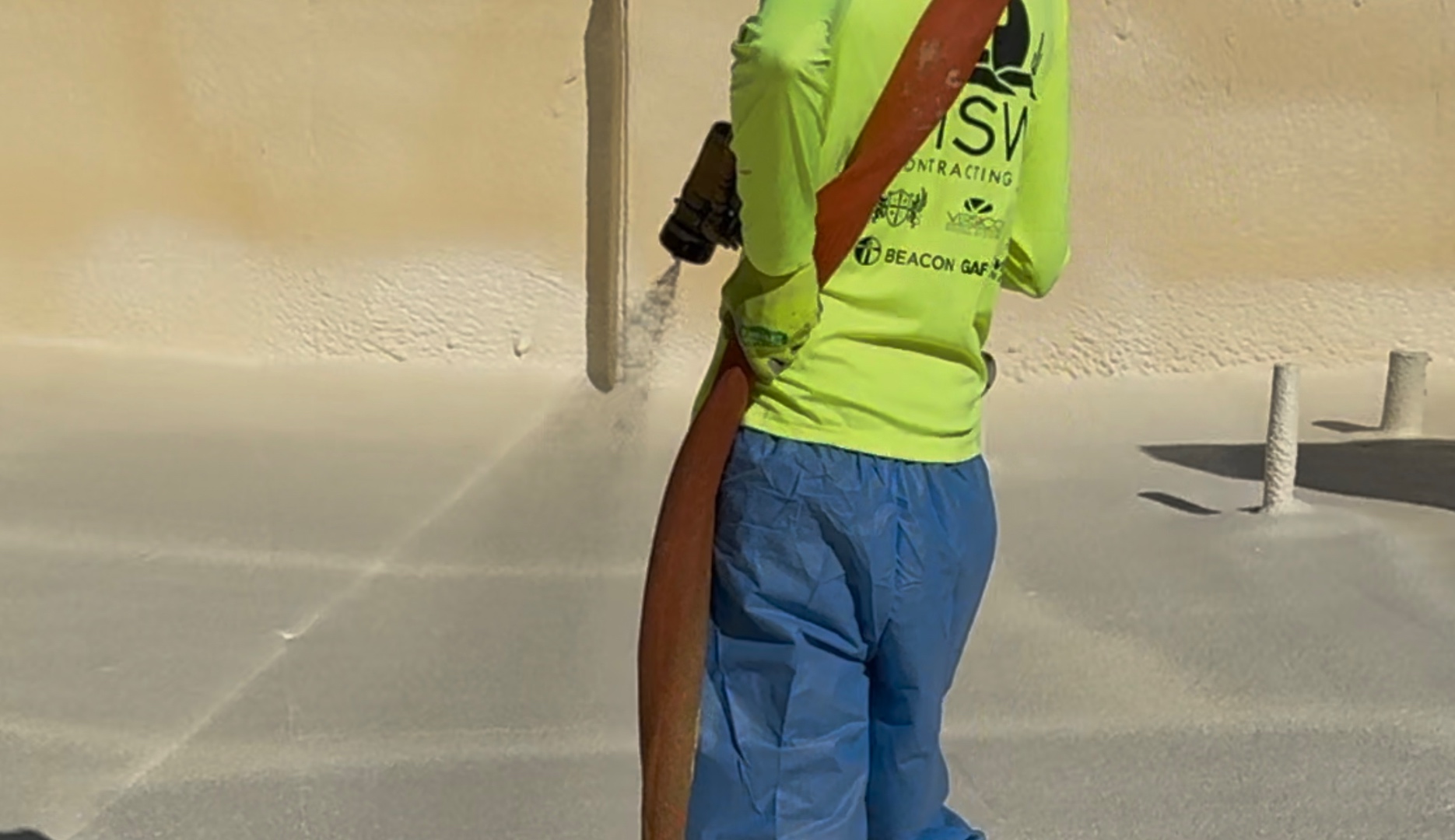
Spray polyurethane foam (SPF) is a two-component liquid system sprayed directly onto your existing roof substrate where it expands into a rigid, closed-cell foam. It cures to form a seamless, monolithic membrane that simultaneously insulates and waterproofs — with no seams, laps, or penetrations where leaks can start.
Unlike traditional roofing systems, SPF conforms to any roof shape, including irregular penetrations and transitions. It self-flashes around curbs, vents, and HVAC equipment — eliminating one of the most common leak points on commercial roofs.
- R-6.5 insulation value per inch of foam
- Seamless, monolithic waterproof membrane
- Self-flashing around all roof penetrations
- Applied directly over most existing roofs — no tear-off needed
- Lightweight: adds only 50–60 lbs per 100 sq ft
Why Choose SPF
Benefits for Arizona Commercial Properties
From warehouses in Chandler to retail centers in Scottsdale, SPF roofing delivers measurable performance advantages over conventional systems.
Energy Savings Up to 30%
Arizona's summer sun can push roof surface temperatures to 170°F or higher on dark membrane roofs. SPF's high R-value acts as a thermal barrier, dramatically reducing heat transfer into your building and cutting HVAC loads — with typical energy savings of 20–30% annually.
Renewable — Not Replaceable
When the protective top coating reaches the end of its service life (typically 10–15 years), it can simply be re-coated rather than replaced. This makes SPF one of the few truly renewable commercial roofing systems — and dramatically lowers the long-term cost of roof ownership.
No Costly Tear-Off
In most cases, SPF can be applied directly over your existing roof without tearing it off — saving thousands in disposal costs and keeping your business operational during installation. We'll assess your existing roof condition during a free inspection.
Superior Wind Uplift Resistance
Because SPF is adhered directly to the substrate and forms a continuous membrane, it provides outstanding wind uplift resistance — a critical factor in Arizona's monsoon season with gusts that can exceed 60 mph.
Our Process
How We Install Your Foam Roof
Free Roof Inspection & Assessment
We perform a thorough inspection of your existing roof to assess moisture content, substrate condition, and suitability for foam application. If moisture is present, it must be addressed before installation.
Surface Preparation
The existing roof is cleaned, any failed areas are repaired, and the surface is primed as needed to ensure optimal foam adhesion.
SPF Application
Our certified technicians spray the two-component polyurethane foam to the specified thickness, building up additional foam at low spots to correct drainage issues.
Protective Top Coating
A UV-resistant elastomeric or silicone top coat is applied over the foam, typically at 20–30 mils thickness. This coating protects the foam from UV degradation, provides additional waterproofing, and gives the roof its final reflective white finish.
Final Inspection & Documentation
We conduct a thorough post-installation inspection, take photographs, and provide you with warranty documentation and maintenance guidelines.
FAQ