
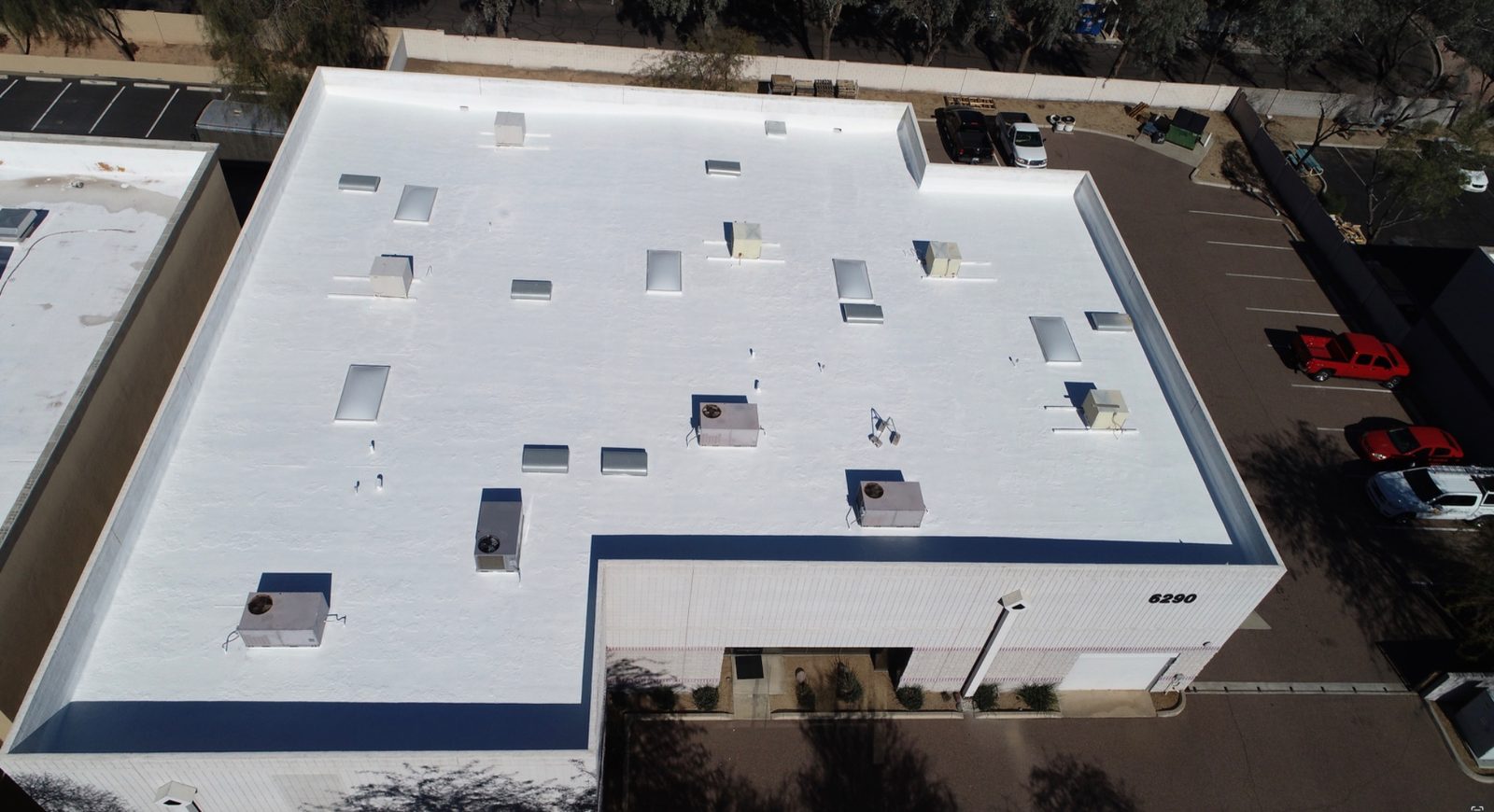
9,000 Sq Ft Industrial Foam Roof Recoat — Chandler, AZ
A Chandler industrial building with a beat-up polyurethane foam roof — low spots holding water, blisters and bubbles across the field, cracks and holes worked into the aging surface — needed real repairs before another coating would stick. We raised the low areas with fresh SPF, cut out and refilled every blister, sealed the cracks and penetrations, then locked the whole roof in with 2 coats of AC100 premium white elastomeric.
The ChallengeA Chandler industrial foam roof that needed real repairs, not just a fresh coat of paint
This 9,000 square foot industrial building sits in Chandler, Arizona — a busy tilt-up warehouse with a roof full of HVAC package units, skylights, and exhaust stacks. The roof system was spray polyurethane foam (SPF) with an elastomeric topcoat, which is the right system for Phoenix commercial buildings. But the roof was overdue for attention, and it showed.
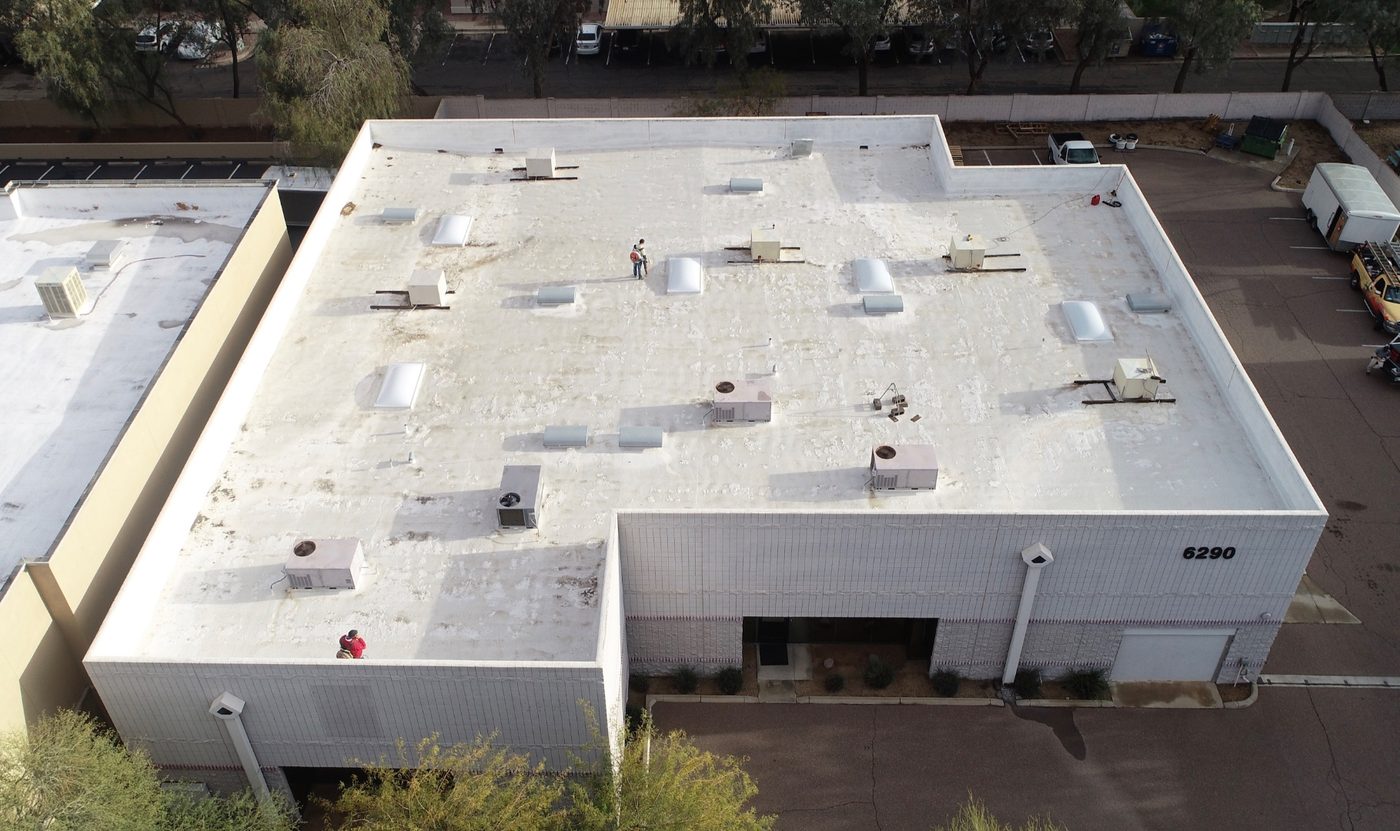
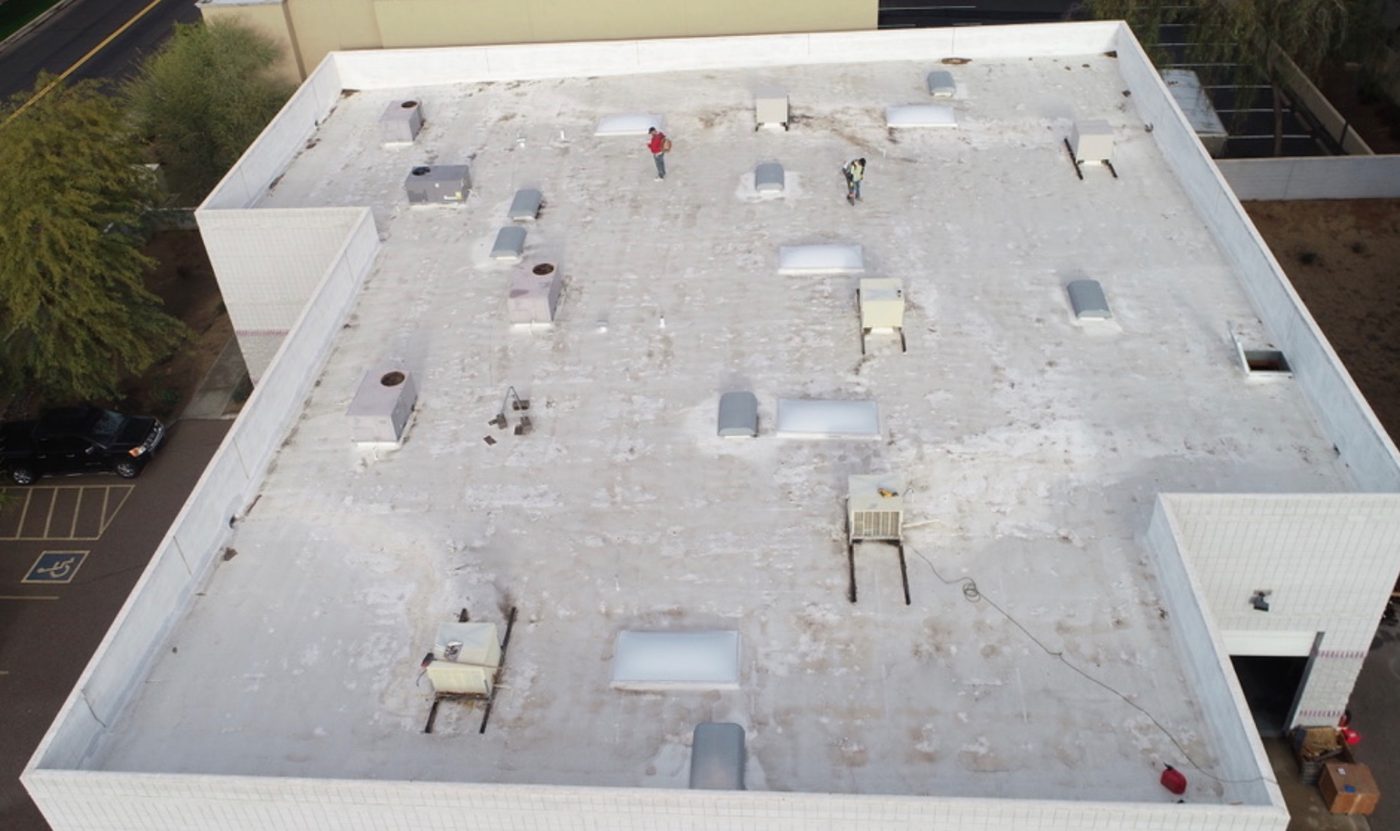
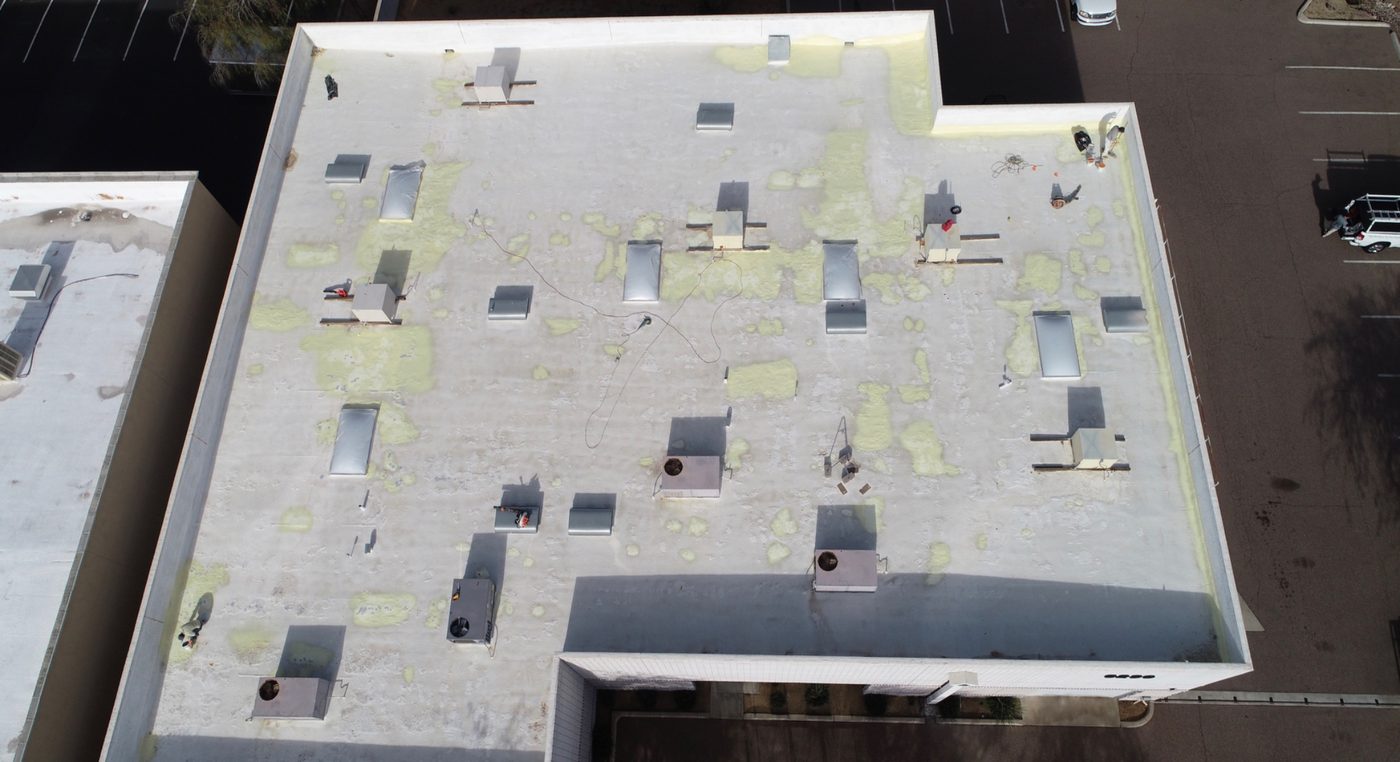
This wasn't the kind of roof where you pressure-wash it and roll on a new topcoat. There were four different problems layered on top of each other. Several low spots across the field were holding water after monsoon storms. Dozens of blisters and bubbles had formed in the existing foam, some fist-sized and larger. The surface was worked with cracks and small holes letting water into the substrate. And penetrations around HVAC curbs and skylights had failed at the transitions.
You can't coat over any of that and call it a job. Coating over a blister traps water and the blister comes back bigger. Coating over a low spot doesn't fix drainage — it just paints the puddle white. Coating over a crack seals it for maybe a month before the coating splits at the crack line. The right answer on a Chandler foam roof in this condition is honest repair work first, then a heavy elastomeric system to lock the whole thing in.
What We FoundBefore: weathered foam, blisters, low spots, and failed penetrations
The ScopeRepair first, coat second — the honest way to restore a foam roof
The restoration plan was straightforward: fix everything the roof needed fixed, then apply a full 2-coat AC100 elastomeric system over a properly prepared surface. Cutting corners on any of the repair steps would have shortened the life of the finished system by years. Here's exactly what the scope covered:
Project scope of work
- Full drone survey and punch-walk: Documented every low area, blister, crack, hole, and failed penetration across all 9,000 sq ft before any material was ordered
- Low-area buildup: Raised the low spots by adding fresh spray polyurethane foam where the substrate had settled or worn thin, restoring positive drainage so water sheds to the drains instead of ponding on the roof
- Blister and bubble repair: Cut out every blister and bubble down to sound foam, then refilled with fresh SPF flush to the surrounding surface — the only correct way to handle blisters on a foam roof
- Crack and hole repair: Sealed every crack in the existing foam and refilled every hole with SPF or elastomeric mastic, depending on size and location
- Penetration prep: Scraped, cleaned, and primed every HVAC curb, skylight curb, vent stack, and parapet transition in preparation for reinforcing fabric and elastomeric mastic
- Surface cleaning: Pressure-washed the entire prepped surface to remove chalk, dust, and debris — elastomeric adhesion is only as good as the surface prep underneath it
- Coating system: 2 full coats of AC100 premium white elastomeric — the first coat seals and primes the foam and repair work, the second coat builds the protective film thickness that drives the system's UV resistance, cool-roof reflectivity, and warranty rating
- Mil-thickness QC: Wet mil readings during application to confirm we hit manufacturer-required film build across every square foot
- Final walkthrough and warranty: Photo-documented punch-walk with the owner, then a 10-year warranty issued directly by Vanguard Roofing AZ
During the JobThe repair work you don't see once the white coating goes down
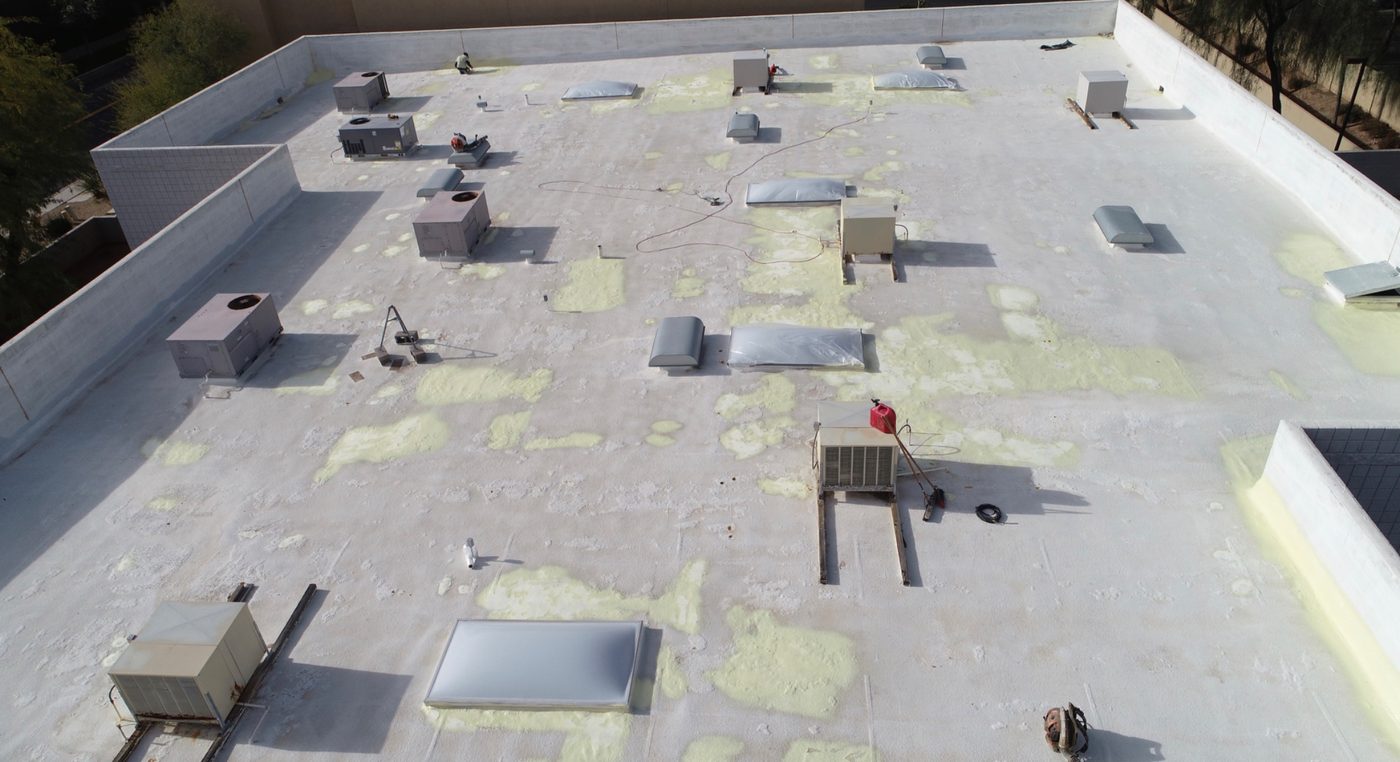
The two during-the-job shots below show the work that most property owners never see, because it's buried under the finished white surface. Everywhere you see yellow SPF against gray primed foam, that's a repair — either a blister we cut out and refilled or a low area we built back up to drainage. On a 9,000 sq ft industrial roof like this, you're looking at dozens of individual repairs before any topcoat gets sprayed.
The ResultA bright, watertight roof with a real drainage plane and a 10-year warranty
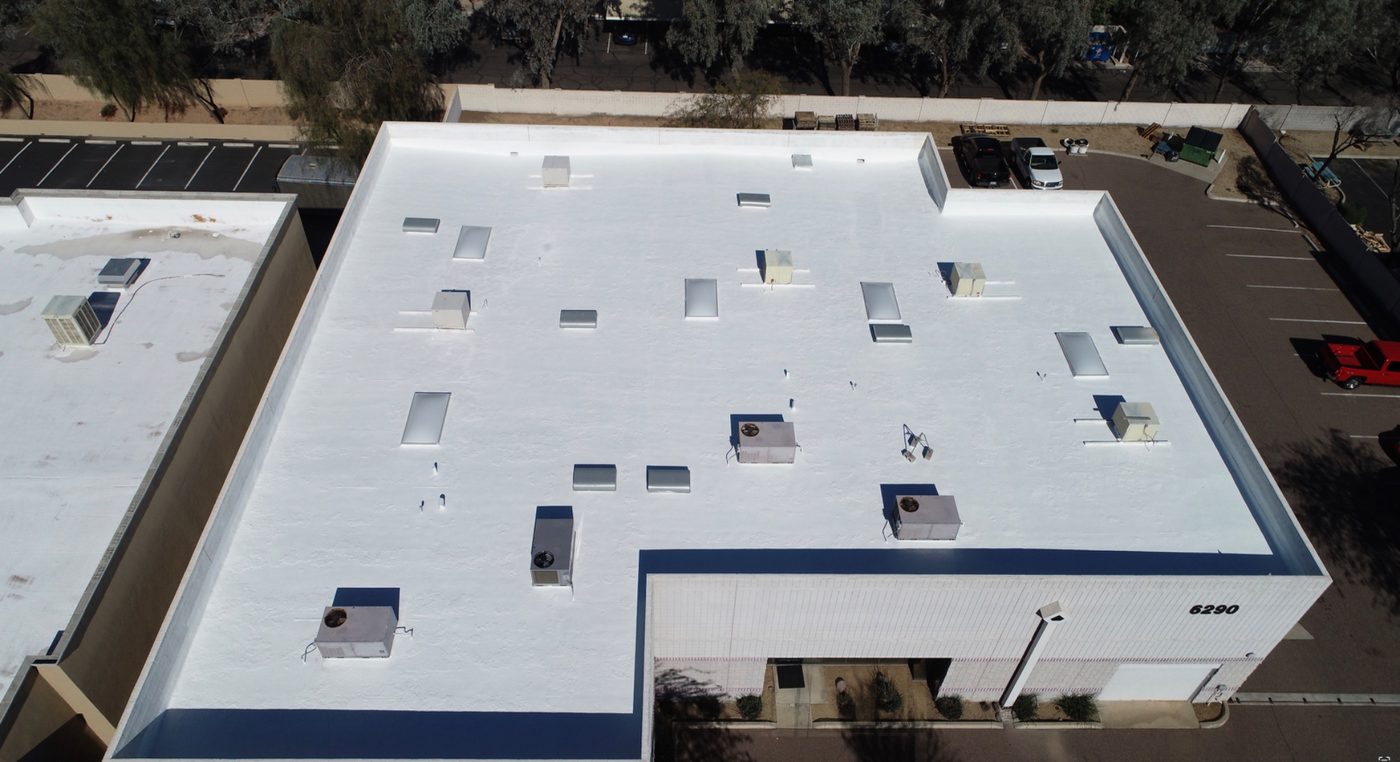
The finished roof is clean, uniform, bright white AC100 elastomeric across all 9,000 square feet. Every low area drains. Every blister and crack is repaired and buried under a continuous elastomeric membrane. Every HVAC curb, skylight, and vent stack is sealed. The cool-roof performance is dramatic — a white AC100 surface reflects the vast majority of solar heat back to the sky instead of soaking it into the building, so rooftop package units run against a cooler ambient and the building is easier to condition through Arizona's 110°+ summers.
The Warranty10-Year Coverage — backed by Vanguard, not a third party
This restoration is covered by a 10-year warranty issued directly by Vanguard Roofing AZ. If the coating fails or a leak develops during the warranty term, we come fix it — no third-party claims process, no manufacturer hand-offs, no fine-print exclusions that mysteriously void coverage after the first monsoon. Our work, our warranty, our name on the paperwork.
Why real repairs beat "coat and hope" on a foam roof
Most of the foam roof failures we see in Chandler and across the East Valley come from prior contractors who coated over blisters, cracks, and low areas instead of fixing them. It looks great for one summer. Then the trapped water in the blisters expands and pops, the coating cracks along every unrepaired seam, and the low spots start ponding through the new coating within a year. On a 9,000 sq ft industrial building, the cost difference between doing the repair work right the first time and re-doing a bad recoat two years later is tens of thousands of dollars — plus the leaks and interior damage in between. Repair first. Coat second. It's the only way a foam roof restoration gets you a real decade of service life.
About the PropertyIndustrial building in the Chandler warehouse corridor
The building is a tilt-up warehouse with rooftop HVAC, forklift and dock activity that vibrates the structure daily, and a full roof-mounted equipment field — the kind of workhorse building that runs the Chandler and Gilbert industrial market. Keep the foam roof recoated on schedule and it will run 25 to 30 years. Miss a recoat cycle and you're looking at a full tear-off — usually six figures on a building this size.
If you own or manage an industrial building anywhere in the Phoenix metro and your foam roof is showing blisters, low spots, or ponding water, we'd be glad to fly it with a drone and give you an honest repair-and-recoat vs replace assessment. See our industrial & warehouse roofing services →