
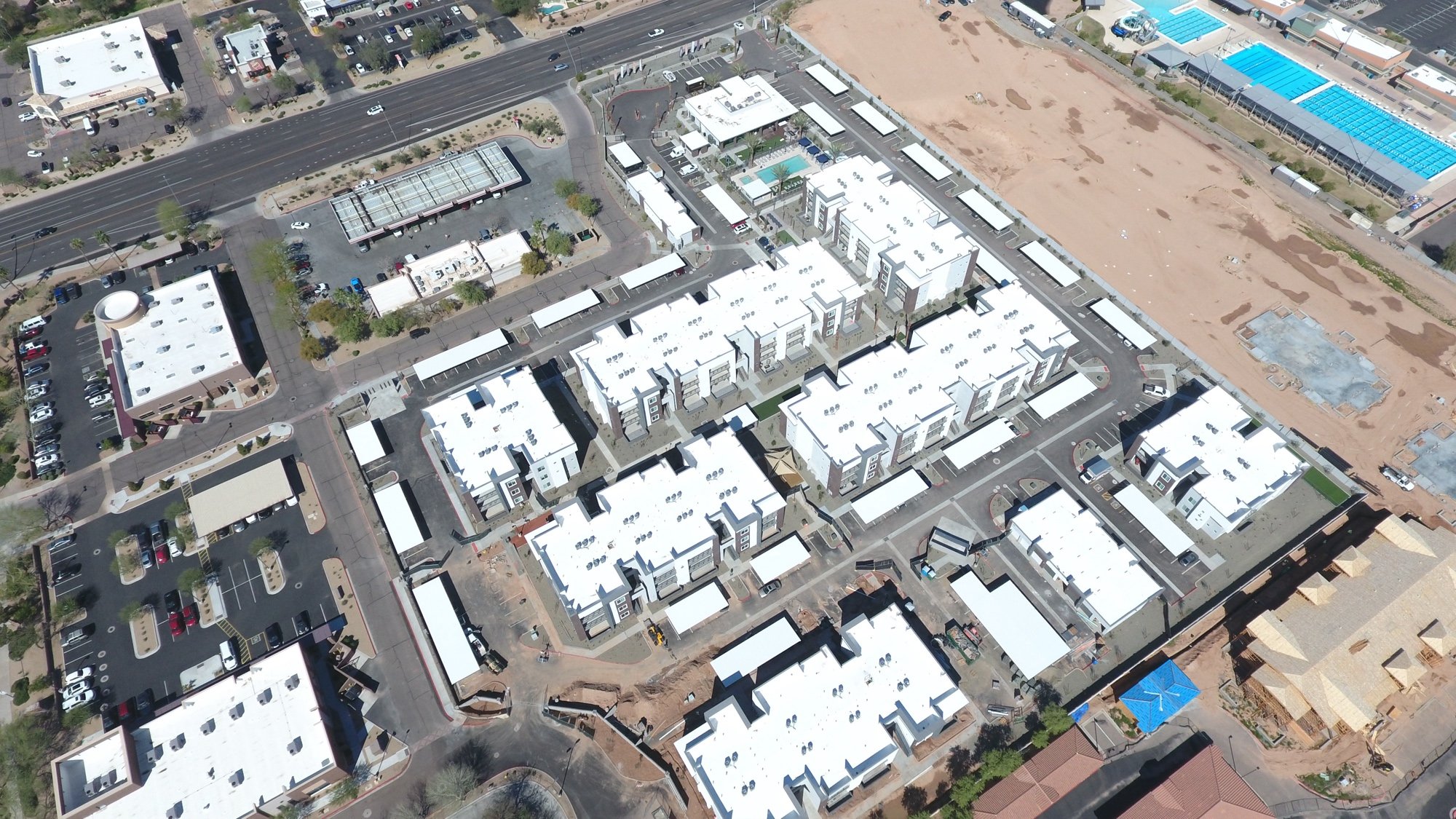
Case Study: 11 Buildings, 12 Months — Aster at Mountain Vista Foam Roof Community, Mesa
Aster at Mountain Vista is a new-construction multifamily community in east Mesa with 11 residential buildings, delivered for Ascent Multifamily Development — the general contractor we've worked with for years and continue to work with today. Over roughly twelve months in 2024, Vanguard sequenced polyurethane foam roofs across every building on the site, coated with ARMORCOAT AC100, on a phased schedule that let the GC turn keys building by building rather than waiting for the whole community to finish. This is what repeat-client, multi-building new construction looks like when the roofing trade is running on schedule.
Project SnapshotAster at Mountain Vista — East Mesa, AZ
East Mesa's multifamily corridor — the ring of new apartment communities being built between the Superstition Mountains and the Loop 202 — has become one of the fastest-growing residential markets in the entire Phoenix metro. Aster at Mountain Vista sits inside that corridor: an 11-building garden-style apartment community with covered parking, athletic amenities, and mountain views out every east-facing window. The site is exactly the kind of new-construction multifamily project we've been executing for years — repeat GC client, phased delivery, and a roofing scope that has to hold to a schedule so leasing can start on time.
Aster at Mountain Vista — 11-Building Multifamily Foam Roof, Mesa AZ
| Property | Aster at Mountain Vista — Multifamily Community |
| Location | East Mesa, AZ (Superstition Mountains corridor) |
| Building Count | 11 residential buildings |
| Roof System | Polyurethane spray foam + ARMORCOAT AC100 |
| Scope | New-construction foam roofs, phased over 12 months |
| General Contractor | Ascent Multifamily Development — repeat client |
| Coating System | ARMORCOAT AC100 White Elastomeric — 2 coats |
| Warranty | 10-Year No-Leak |
| Completed | 2024 |
| Contractor | Vanguard Roofing AZ — since 1957 |
The ProjectThe building, the client, and what we were solving for
East Mesa's multifamily corridor — the ring of new apartment communities being built between the Superstition Mountains and the Loop 202 — has become one of the fastest-growing residential markets in the entire Phoenix metro. Aster at Mountain Vista sits inside that corridor: an 11-building garden-style apartment community with covered parking, athletic amenities, and mountain views out every east-facing window. The site is exactly the kind of new-construction multifamily project we've been executing for years — repeat GC client, phased delivery, and a roofing scope that has to hold to a schedule so leasing can start on time.
Foam is the right roof system for a garden-style multifamily community in Arizona for the same reasons it's the right system for warehouses and offices — but with an added benefit that matters on residential: the seamlessness of the foam and coating means no seams to leak into a tenant's living room. For more on how we approach large multifamily projects, see our Mesa commercial roofing service area.
The SystemWhy polyurethane foam is the right multifamily roof system in Arizona
When Ascent Multifamily Development specified the roofing package for Aster at Mountain Vista, foam wasn't an afterthought — it was the system chosen up front for what it does across an 11-building community. The specification calls for spray polyurethane foam followed by two coats of ARMORCOAT AC100 white elastomeric across every building.
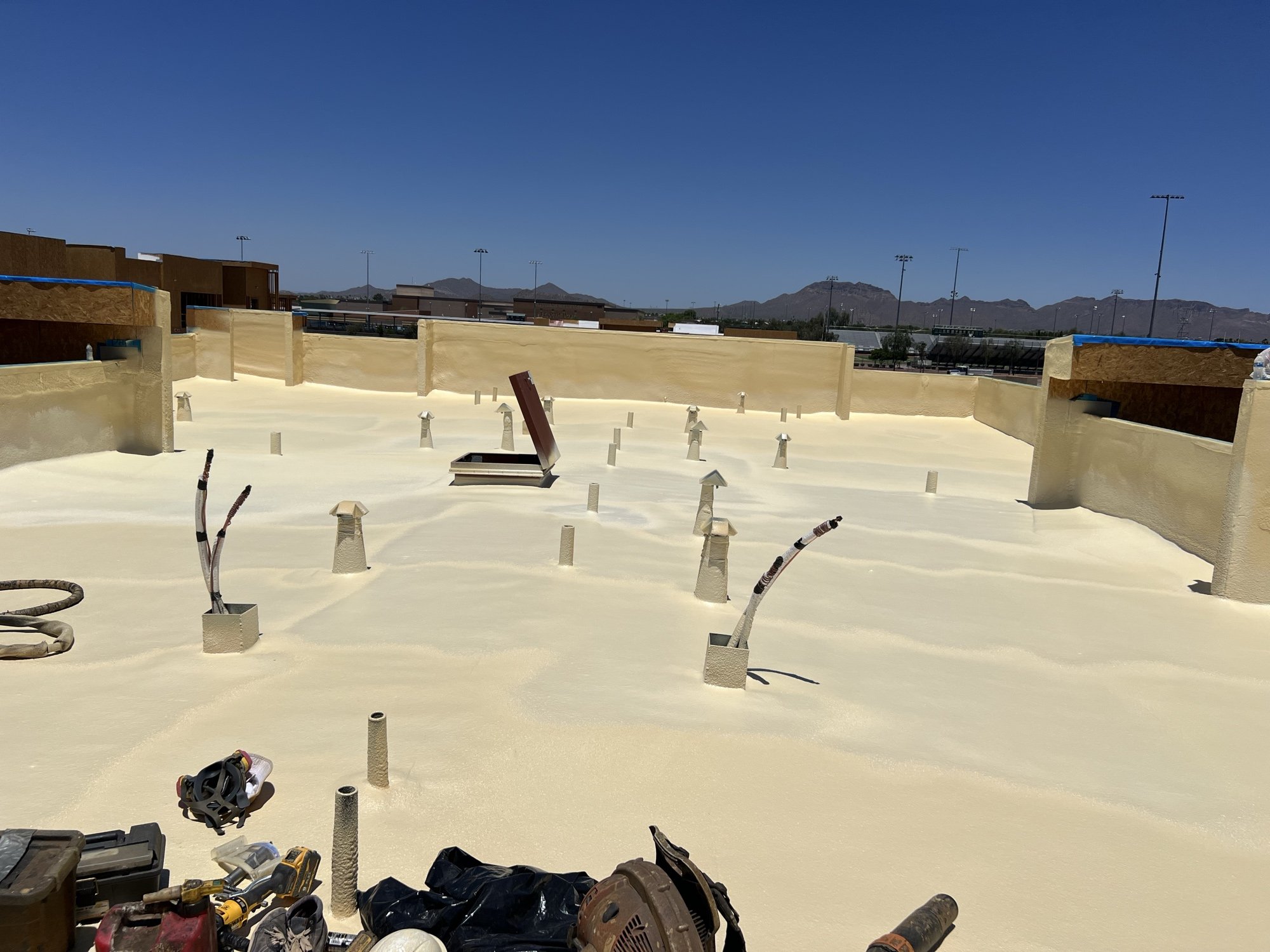
- Seamless — no ply laps to leak. Foam sprays as a monolithic membrane over the entire roof surface, including around every parapet, drain, plumbing vent, and roof-mounted mechanical unit. No seams means no leak paths.
- Continuous insulation. Foam is the insulation and the roofing membrane in one system, delivering R-value across the entire roof plane with no thermal bridging at fasteners or laps — a real HVAC benefit on a garden-style apartment building.
- Highly reflective under two coats of AC100. The white acrylic topcoat drives roof surface temperatures down significantly, extending the life of rooftop equipment and reducing tenant HVAC load.
- Recoatable indefinitely. When the coating layer reaches end-of-life in a decade or so, the foam substrate stays in place and is simply recoated — extending the roof's service life indefinitely on a maintenance-friendly cycle rather than a full tear-off cycle.
Our ApproachHow we sequenced 11 buildings across 12 months
On a new-construction multifamily community, the roofing trade doesn't work in isolation — it fits between framing/decking and the interior trades that follow. Roofs have to dry-in on schedule so drywall and finishes can start. On Aster at Mountain Vista, Ascent needed a roofing partner who could sequence 11 buildings in phased release without a slippage that would ripple down the schedule. Here's how the phased sequence worked:
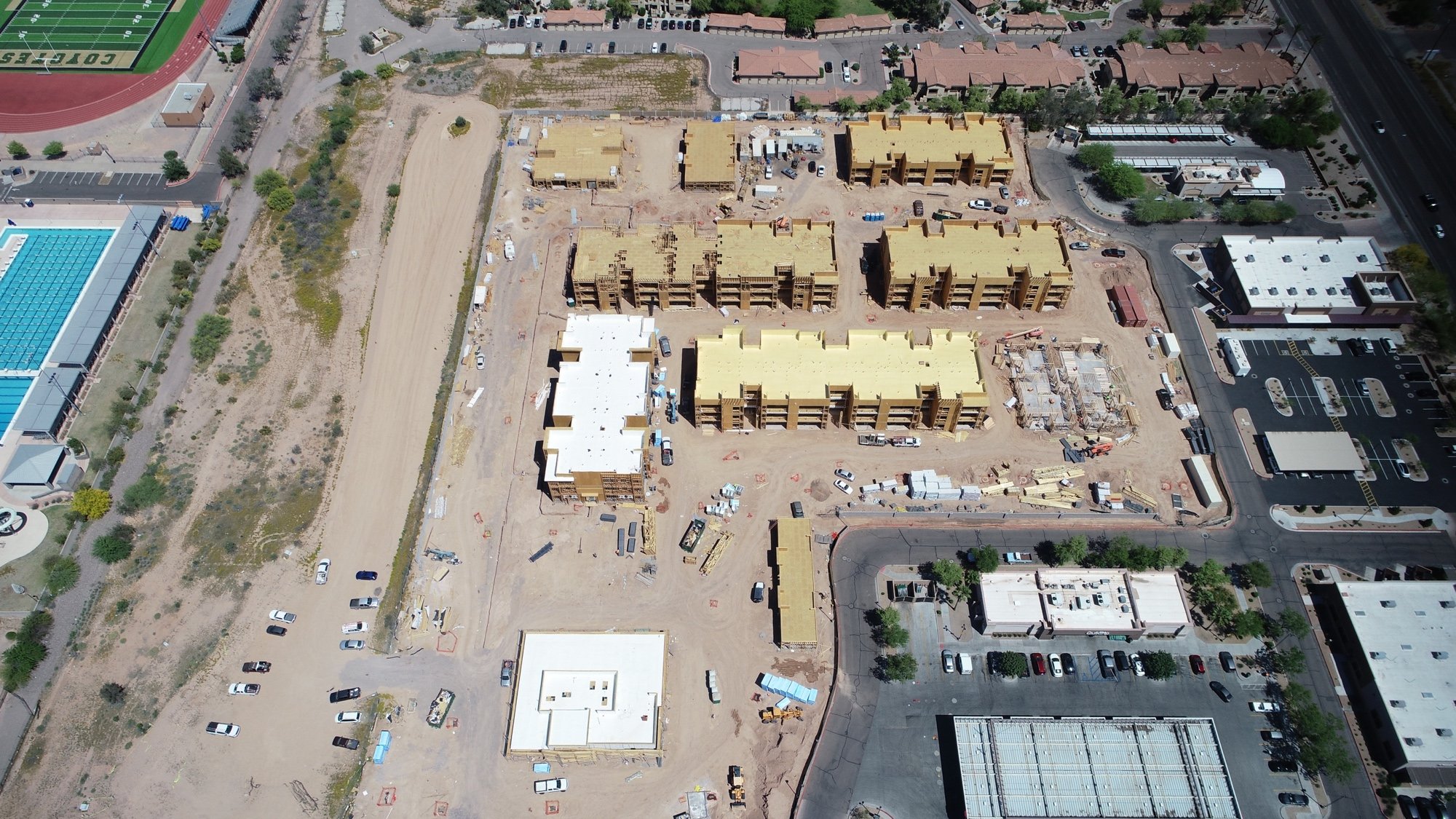
Scope of work — the phased 11-building sequence
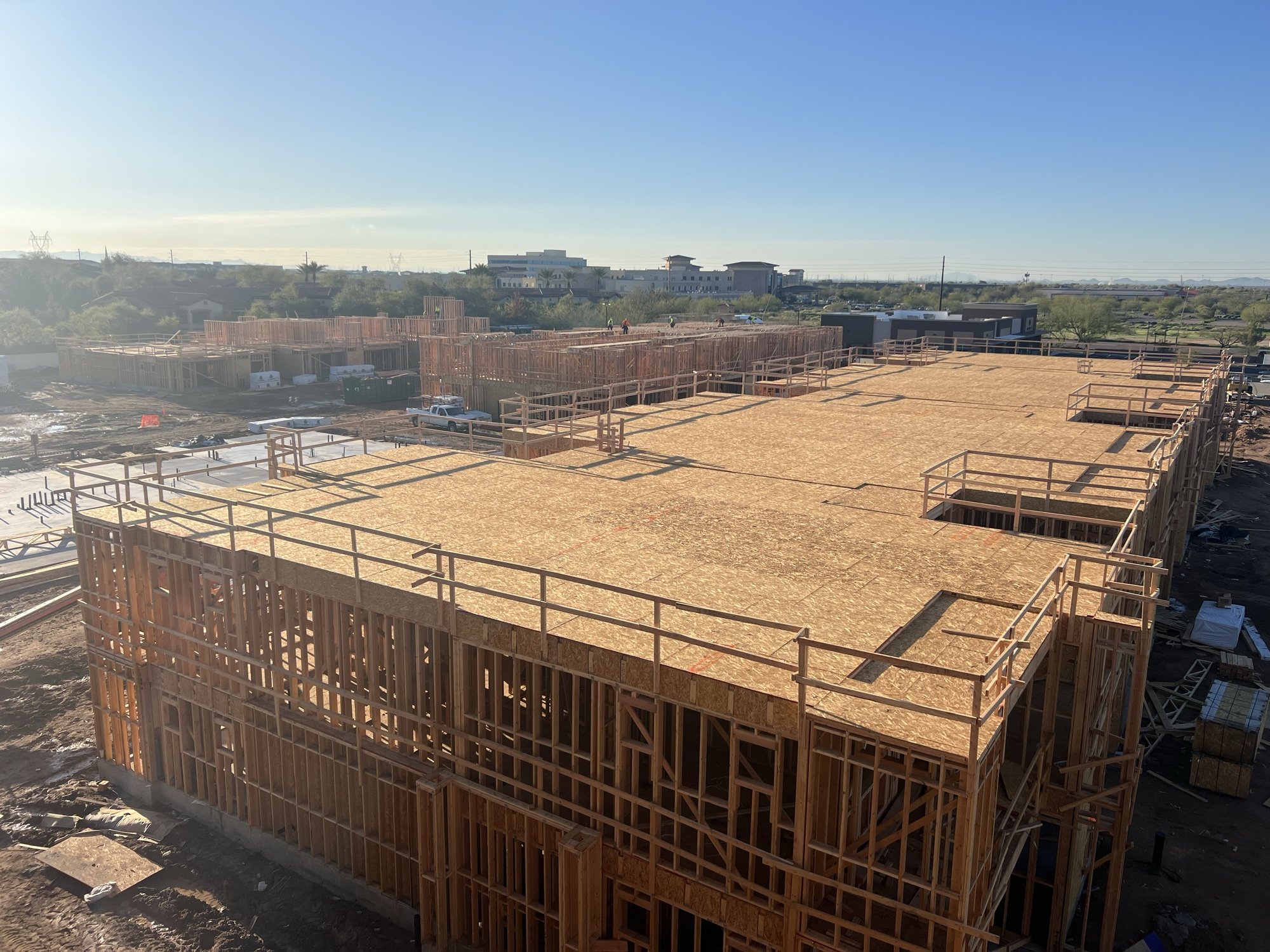
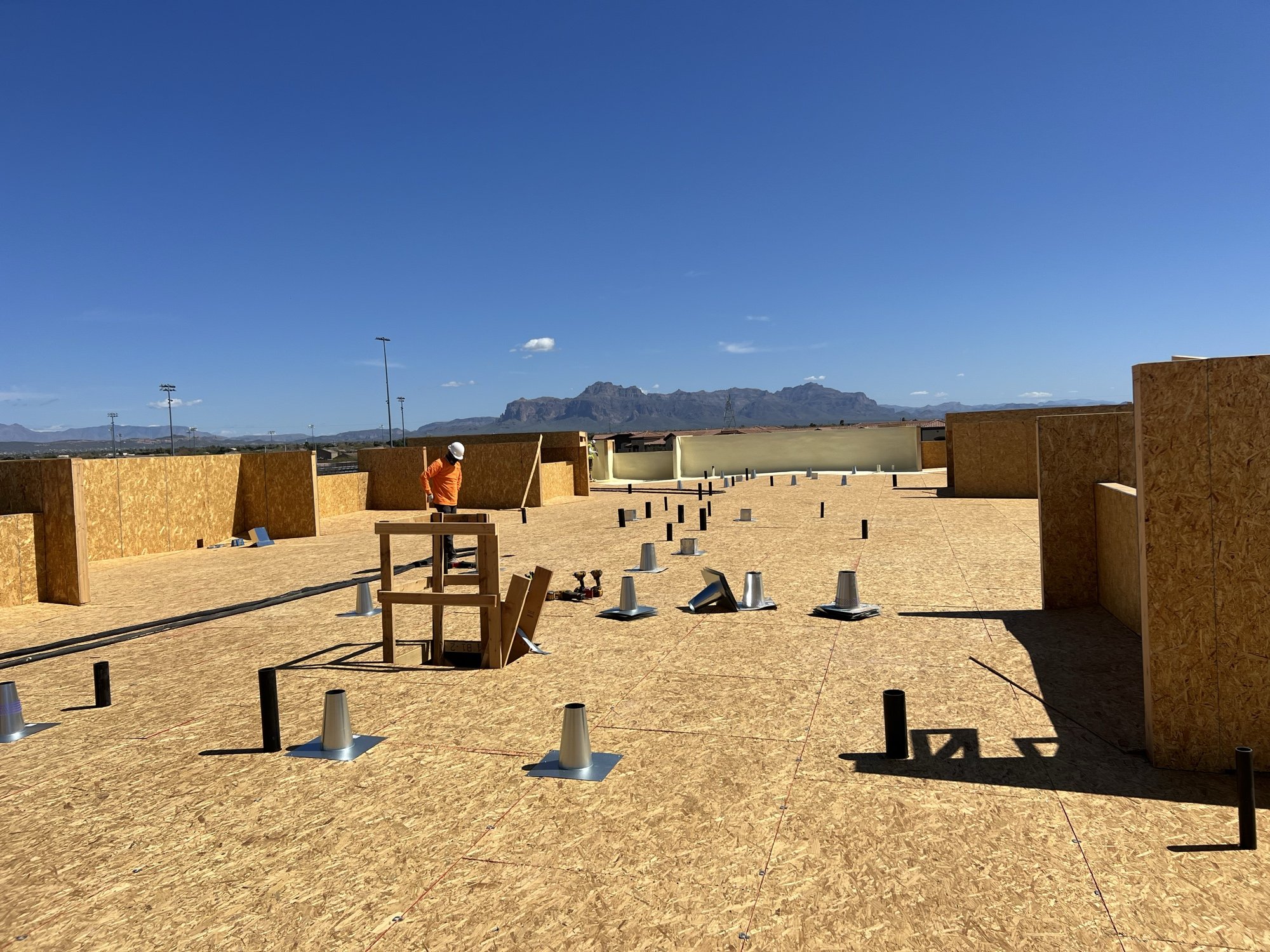
- Framing and decking pre-check. Before each building was ready for foam, we walked the OSB decking with Ascent's superintendent to confirm the substrate was clean, dry, and screwed to spec.
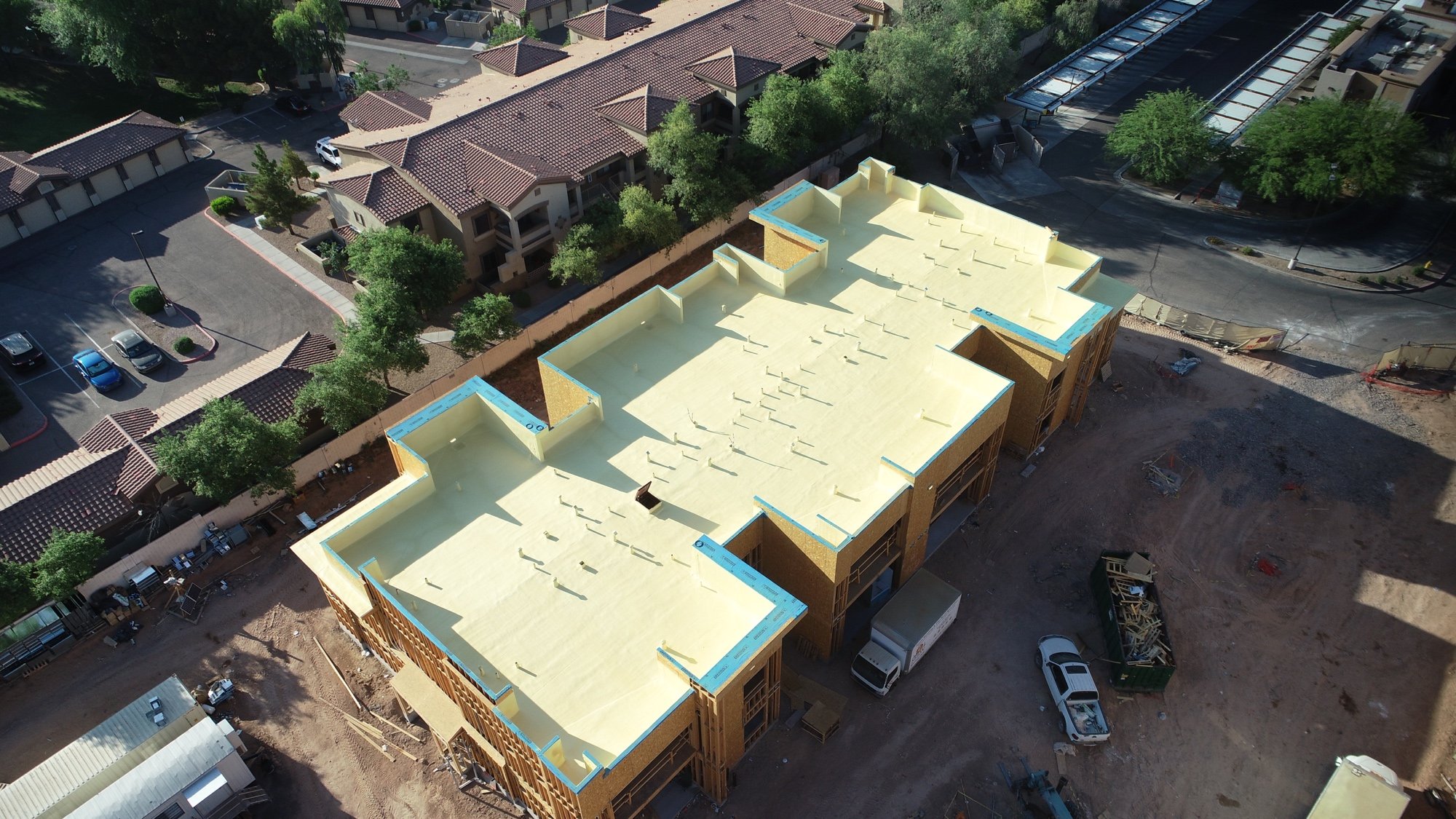
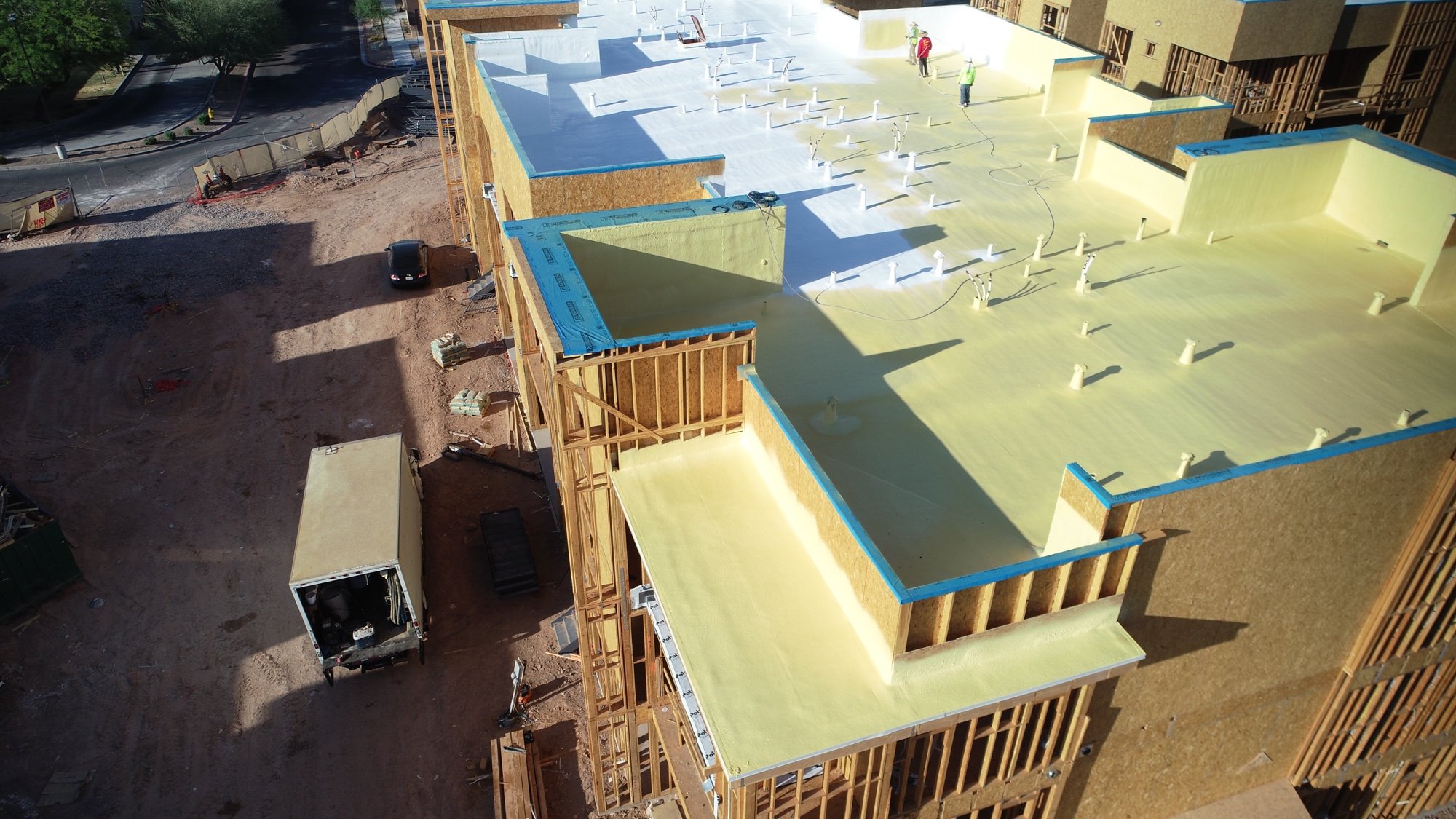
- Spray foam application. Applied polyurethane foam across the entire roof plane of each building, feathering into parapet walls, wrapping HVAC curbs, and self-flashing all penetrations — the entire waterproofing envelope in one seamless pass.
- First coat of AC100. Directional first-coat application of ARMORCOAT AC100 across the finished foam, sealing the substrate and providing base film thickness.
- Second coat cross-directional. Second AC100 pass at 90 degrees to the first, delivering the full-mil thickness required for the 10-year warranty and eliminating pinhole failures.
- Building-by-building sign-off. Each building was walked, verified, and released back to Ascent's schedule as it was completed — buildings could enter the interior trades sequence without waiting for the whole community to finish.
- Repeat across all 11 buildings. Same crew, same spec, same warranty — the operational consistency of running the same sequence eleven times in twelve months is where the schedule was held.
Repeat GC relationships are why this schedule holds. Ascent Multifamily has worked with Vanguard on multiple projects — we know their submittal cadence, their inspector's expectations, and their superintendent's decision authority. That institutional memory shows up in the schedule.
The DetailMulti-building repeat work — why the GC relationship matters more than the bid
On a phased 11-building community, the wrong roofer costs more than they save in the bid. A contractor who wins the roofing on price and then can't hold to the phased release becomes the trade holding up leasing. We've watched other developers pay for that lesson twice. The reason Ascent keeps calling Vanguard back — this project, and the next ones — isn't the number on the bid, it's the fact that when the foam trade is scheduled for a Monday, the crew is on the roof Monday morning, and when a building is scheduled to be signed off on Friday, it's signed off Friday afternoon.
For an owner or developer trying to evaluate roofers on a multi-building project, the real question isn't unit price — it's whether the contractor has done multi-building phased work before and has references who will say it stayed on schedule. Vanguard's history includes multi-year, multi-building programs like this one. See our Verde at Cooley Station case study for another new-construction Ascent project.
The Warranty10-year no-leak warranty across every building in the community
Every one of the 11 buildings at Aster at Mountain Vista is covered by a 10-year no-leak warranty on the finished polyurethane foam and ARMORCOAT AC100 coating system. That means for the next decade, if any covered defect in the foam or coating causes a leak on any building in the community, Vanguard comes back and fixes it. On a phased multi-building project, that warranty consistency across every roof matters — the property manager doesn't have to track different systems, different coverage terms, or different contractors across the community.
The Results11 buildings, one warranty package, one Arizona-owned contractor
Aster at Mountain Vista completed on schedule with every building signed off and released back to Ascent's finish schedule as it came out of the foam trade. The completed community handed over to leasing with one continuous roofing package across all 11 buildings, one 10-year warranty envelope, and one point of contact for the property manager for the next decade — exactly what a repeat GC relationship is supposed to deliver.
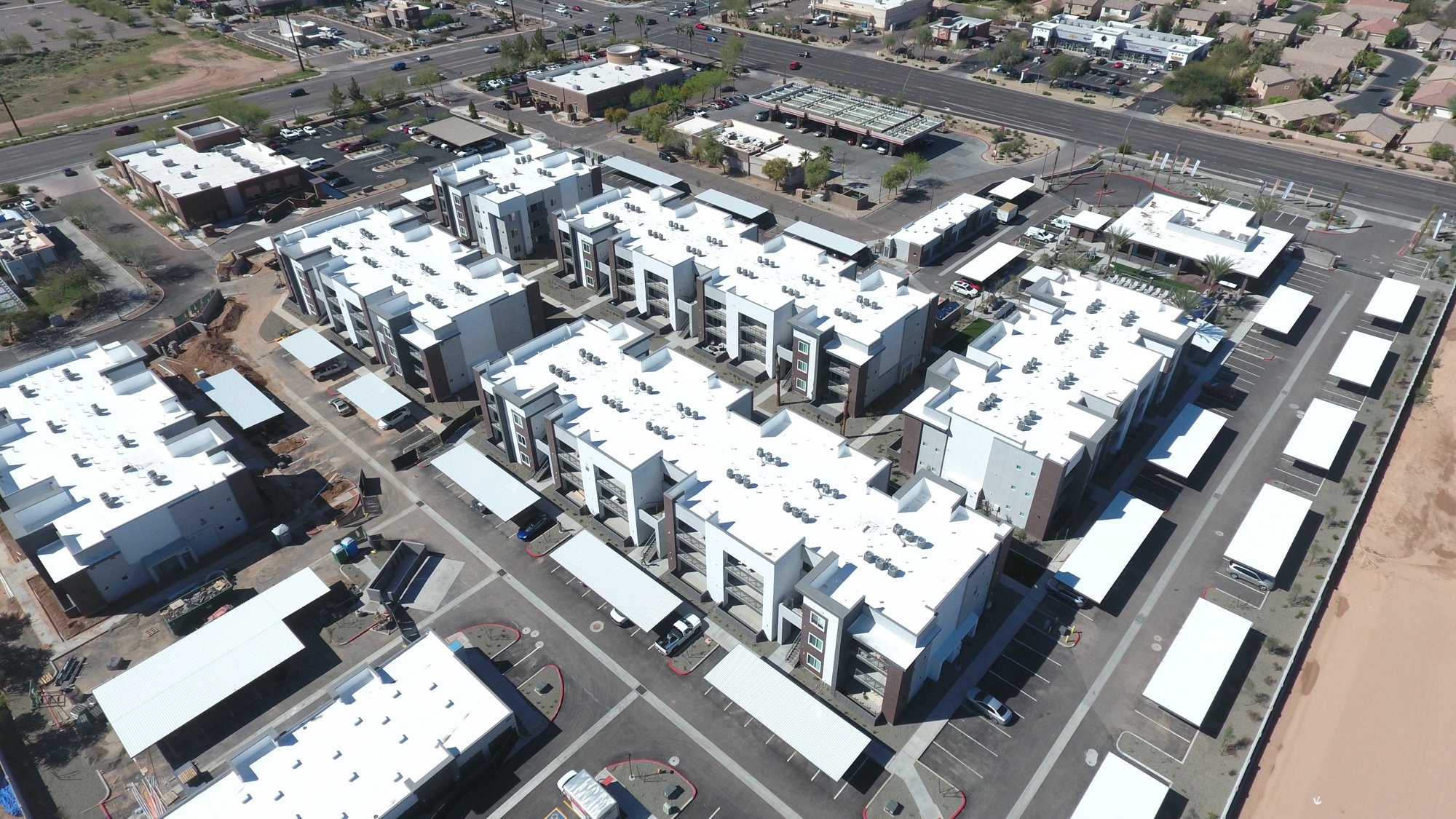
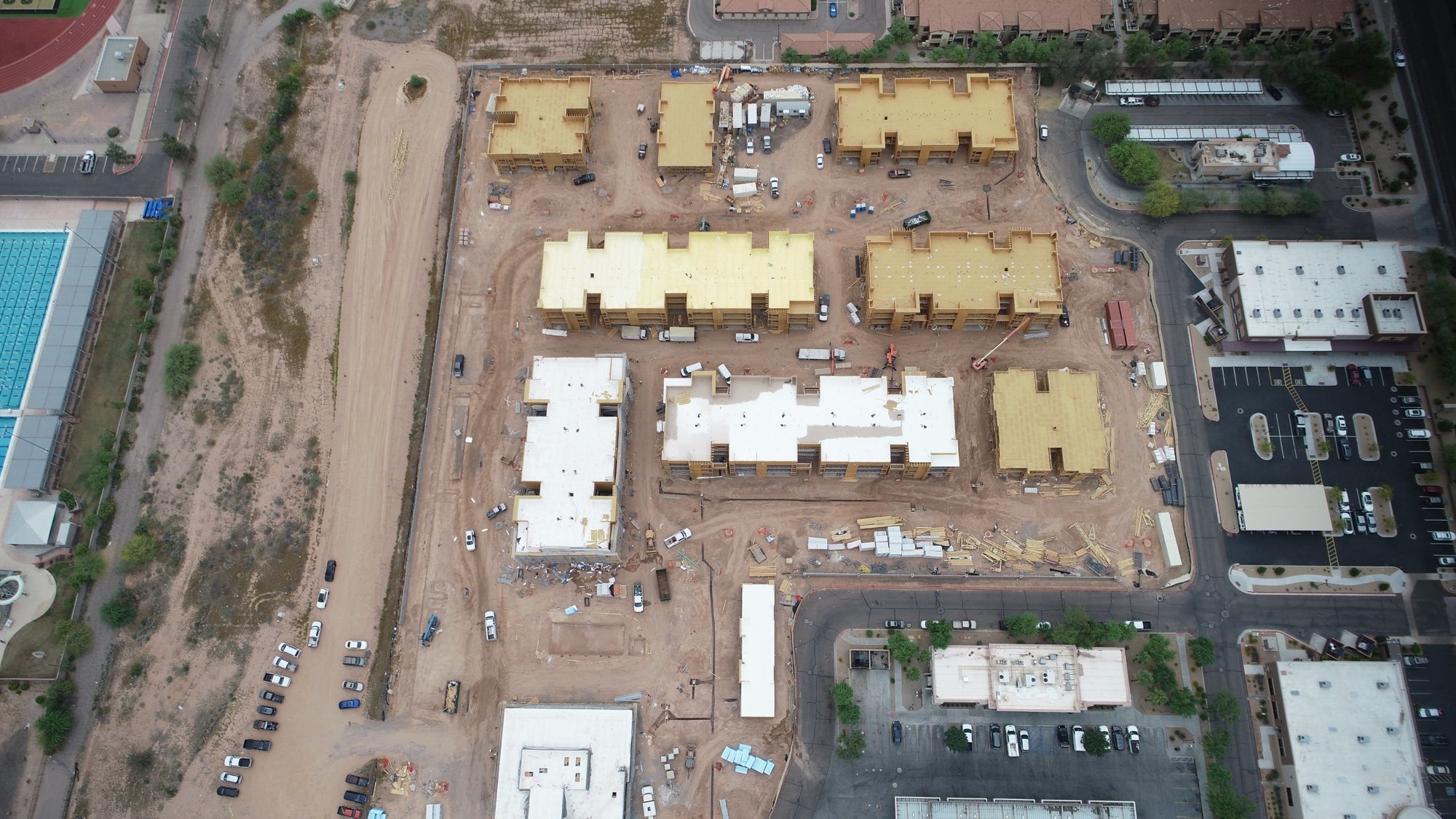
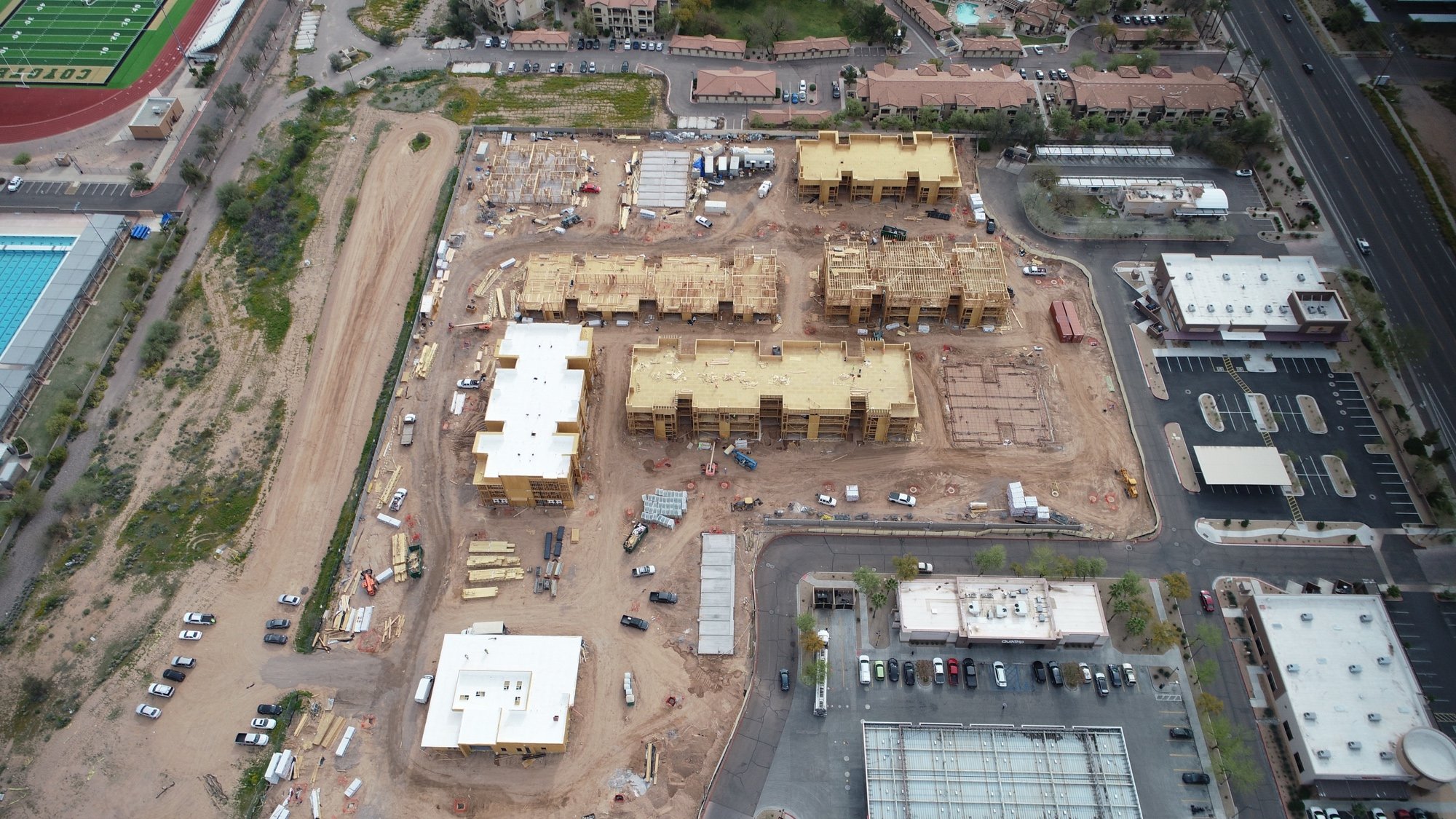
Photo GalleryProject photos
FAQCommon questions
Why use foam instead of TPO on a multifamily community?
Foam and TPO are both good multifamily roofs — the right choice depends on the project. Foam wins where continuous insulation and a completely seamless membrane matter, and where the owner values a recoatable maintenance cycle over a single-membrane replacement cycle. TPO wins where a mechanically-attached warranty package is preferred and where the owner wants a manufacturer NDL warranty. On Aster at Mountain Vista, Ascent specified foam because it fits their long-term maintenance model. For more on the tradeoff, see our blog on TPO vs foam roofing for Phoenix commercial buildings.
How do you keep an 11-building schedule on track?
By running the same crew and the same sequence every time. Multi-building schedules break when the roofer treats each building as a new job — different lead man, different material staging, different QC walk. On Aster we ran one field lead across all 11 buildings and one repeatable sequence: pre-walk, foam, first coat, second coat, walk-off. Same steps, same crew, eleven times. That's how the schedule holds.
Are the roofs at Aster individually warranted or on one master warranty?
Each building carries its own 10-year no-leak warranty on the finished polyurethane foam and AC100 system. Because the same contractor executed the same spec across the whole community, the warranty terms are identical across all 11 roofs — which makes the property manager's life easier over the next decade because there's one contractor and one coverage set to reference for any warranty call.
Do you work with the same general contractor across multiple projects?
Yes, and it's how we prefer to work. Ascent Multifamily Development is a repeat GC client — we've worked with them across multiple communities and continue to work with them today. Repeat relationships mean we know each other's schedule cadence, submittal expectations, and superintendent decision authority — which shows up in phased schedules that hold together and inspections that pass on first walk.
How long does a foam roof last on a multifamily building in Arizona?
The foam substrate itself, once installed, can last essentially indefinitely as long as the coating layer is maintained on cycle. The AC100 topcoat carries a 10-year no-leak warranty; when the coating reaches end-of-life around year 10 to 15, the roof is simply recoated for another decade — no tear-off, no re-work of the foam. That maintenance cycle is a big part of why foam is a good long-term system for multifamily portfolios.