
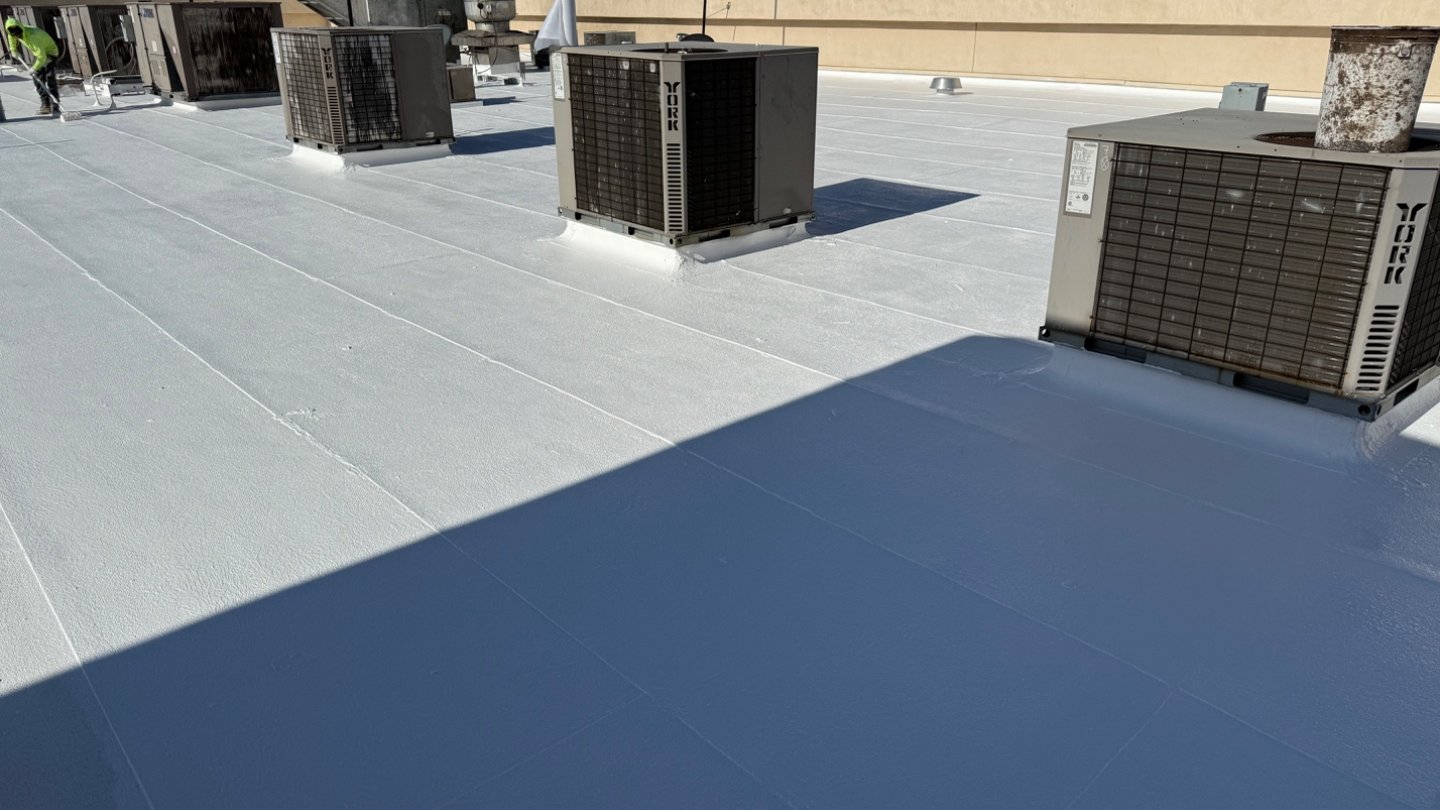
Case Study: 8,755 SF Foam Roof Repair and Silicone Recoat — Cold Beers & Cheeseburgers, Scottsdale
Cold Beers & Cheeseburgers at 116th & Shea needed its foam roof restored: cracks sealed, HVAC and grease penetrations tightened, and a bright white silicone topcoat to cut the summer heat load. We did it while the restaurant kept serving every day.
Project SnapshotThe situation: a chalked-out foam roof caught just in time
The Cold Beers & Cheeseburgers location at 10767 N 116th Street is a North Scottsdale desert-Southwest building — tan stucco parapets, clay-tile accents, foam roof underneath a coating that had chalked out and started flaking. Standard story for a Phoenix-area sports bar built in the mid-2000s: the SPF (sprayed polyurethane foam) was still doing its job as insulation, but the original elastomeric topcoat had oxidized, cracked, and lost most of its reflectivity. Left alone another year or two and it would have started letting UV chew into the foam itself.
The owner didn't want to close. Foot traffic on 116th & Shea doesn't slow down in July, and the restaurant runs a full patio and interior service every day. That meant tear-off wasn't on the table even if we'd wanted it. A properly executed restoration was the honest fit.
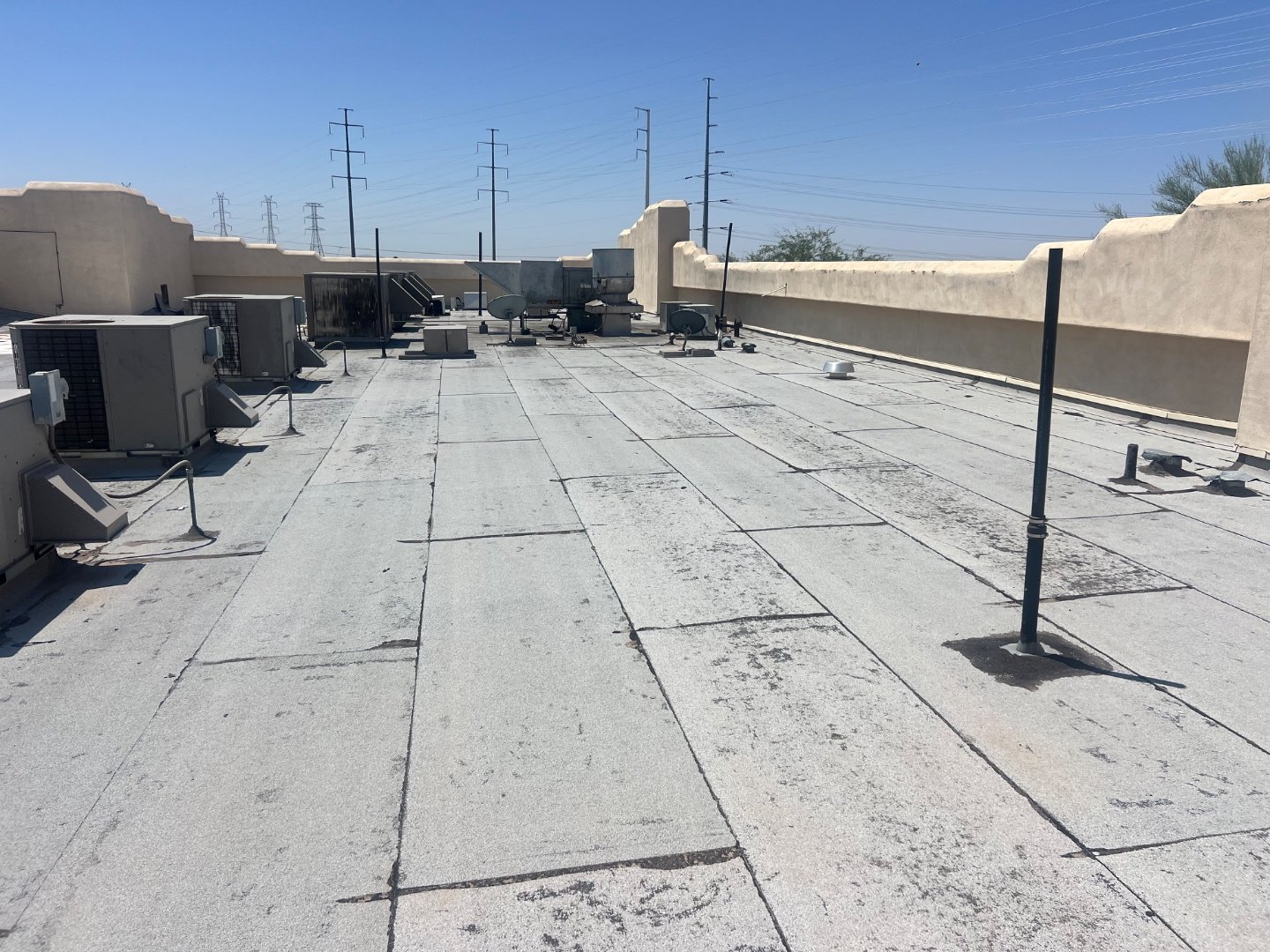
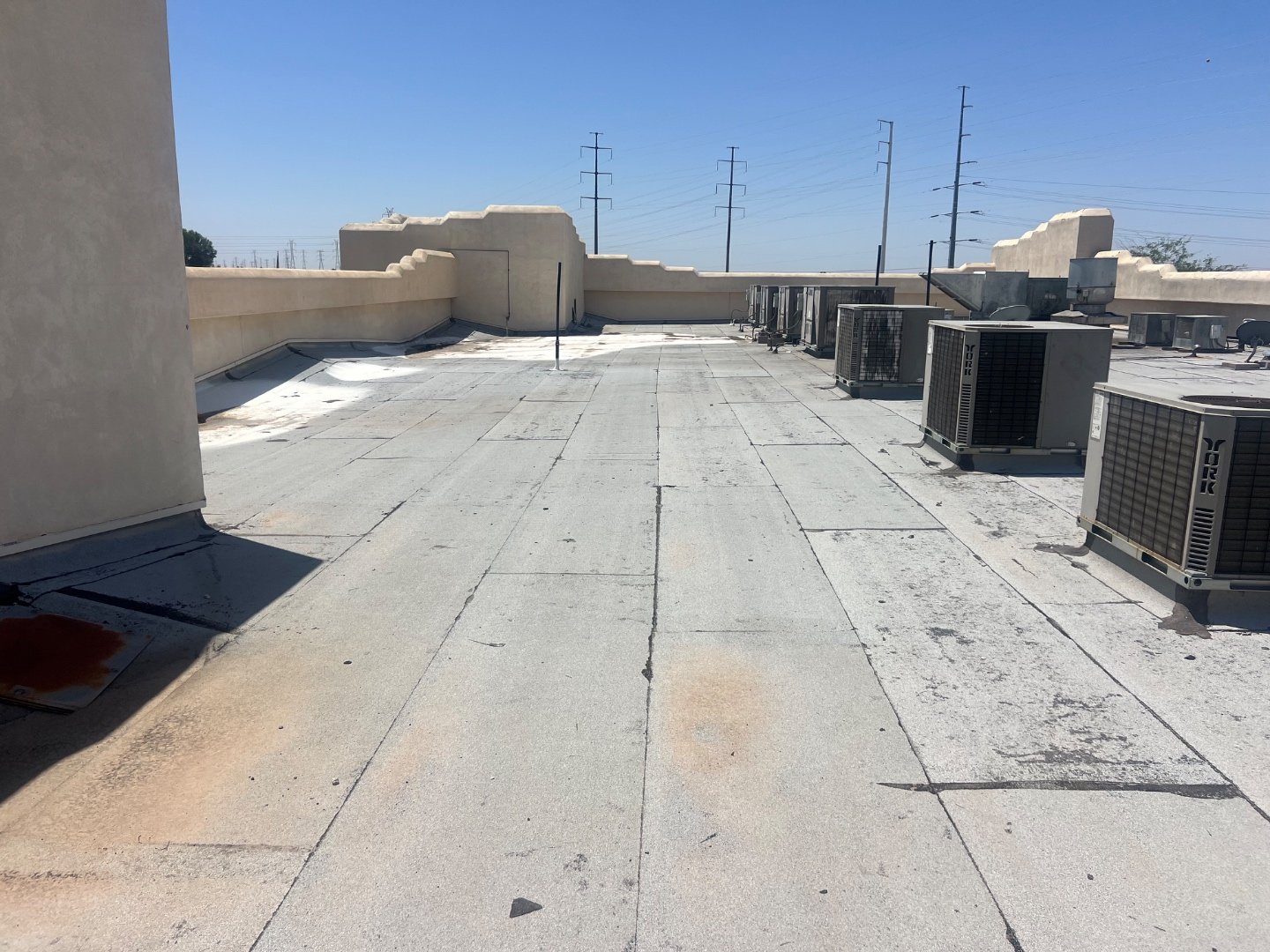
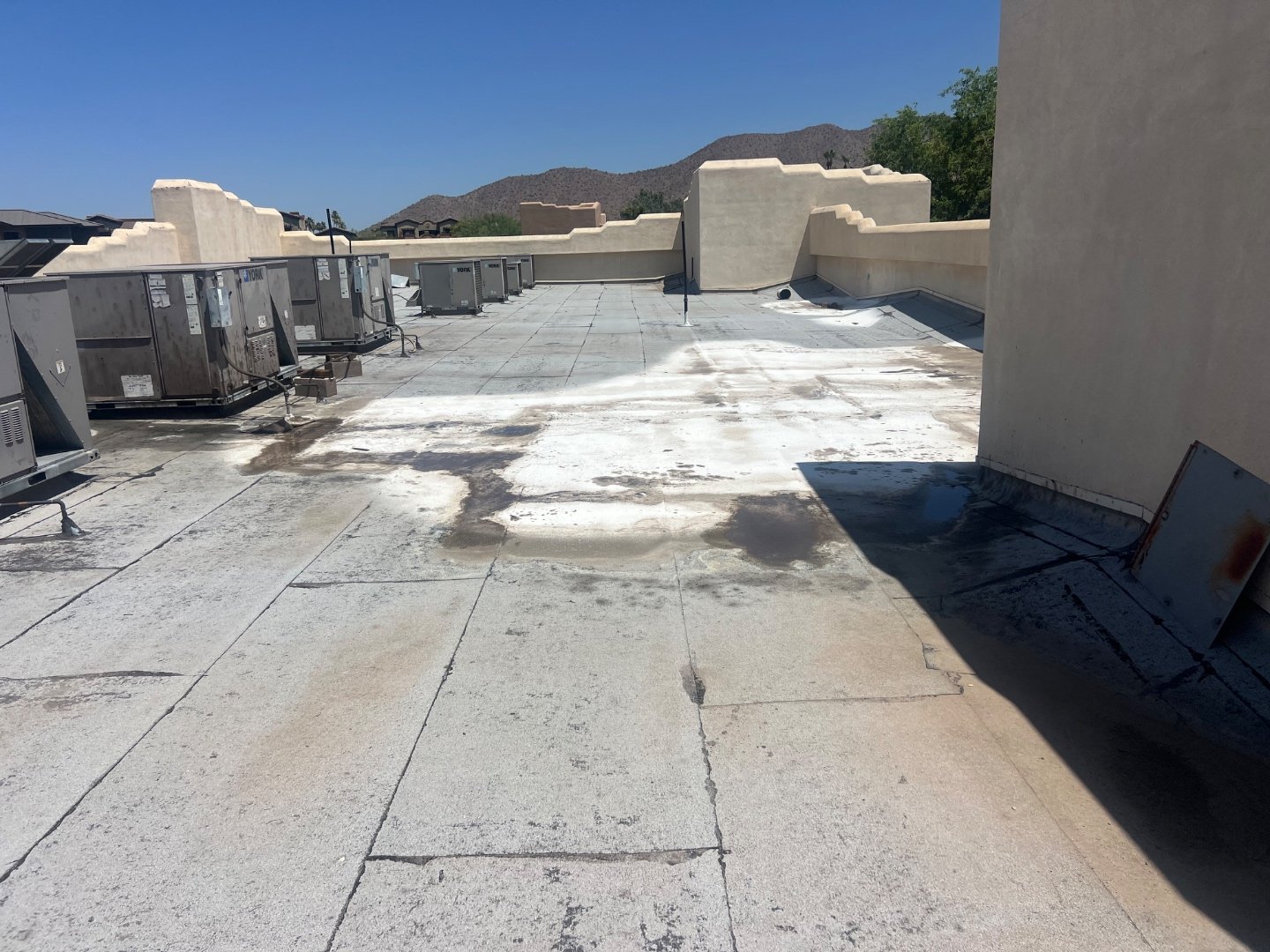
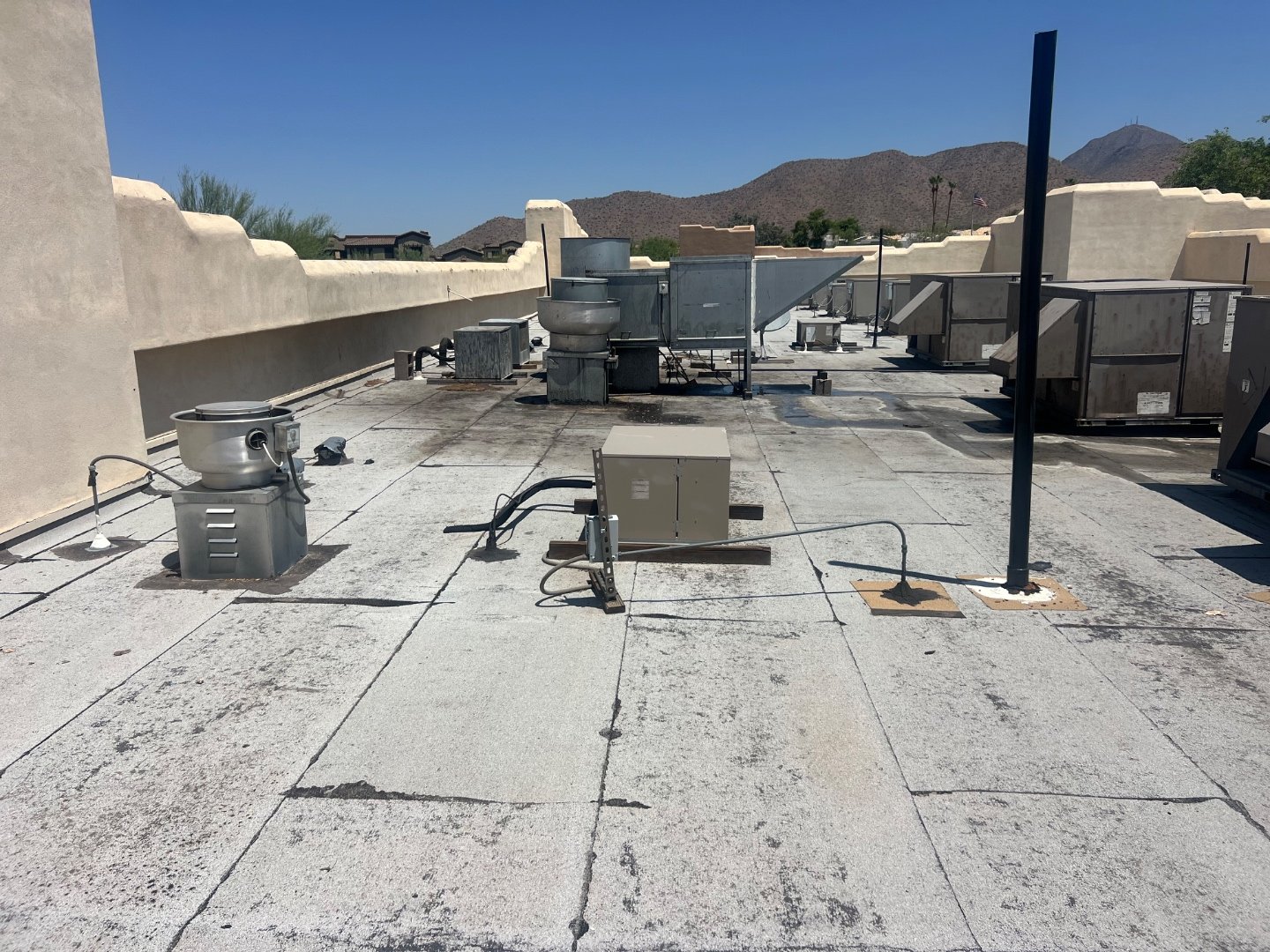
We inspected in early summer and found what we expected: hairline cracks running along the panel seams (visible in the "before" photos below), ponding stains near the low corners, and a few worn spots around HVAC curbs and the grease-trap exhaust that needed real repair — not just a fresh coat of paint on top. Old chalky coating and dust had to come off first, or nothing new would bond.
Why we caught this in time
The exposed foam under the failed coating was still light-tan and structurally intact — not the dark, saturated brown you see once water actually gets into the SPF. Six months later and this might have been a tear-off conversation. That's the whole point of Phoenix foam roofs being on a 5-year inspection cycle: catch the coating before the substrate.
The ScopeSix steps, one restaurant that never closed
Six steps, sequenced so the restaurant never lost a service day.
Cold Beers Scottsdale · Scope of Work · 8,755 SF
- Degrease the entire roof where kitchen exhaust and grease-trap fallout had built up. This is non-negotiable on restaurant roofs — silicone won't bond to anything oily.
- Clean the roof surface of dirt, debris, and chalked-out original coating so the new system keys directly into stable foam.
- Repair every crack and hole in the existing foam with ArmorPutty and reinforcing membrane at every seam, curb, and stress point.
- Base coat the entire 8,755 SF with one full coat of ArmorCoat AC100 elastomeric roof coating.
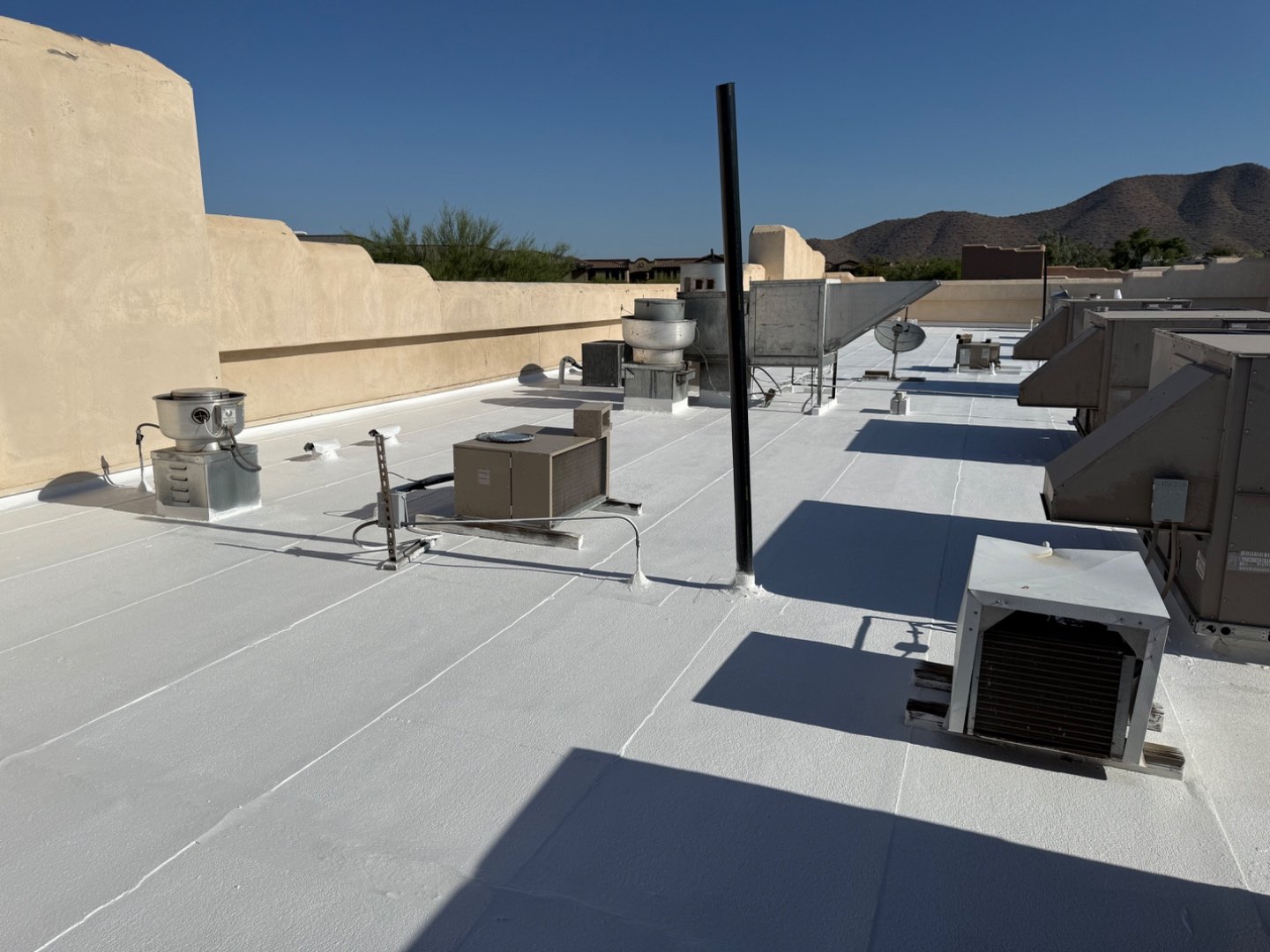
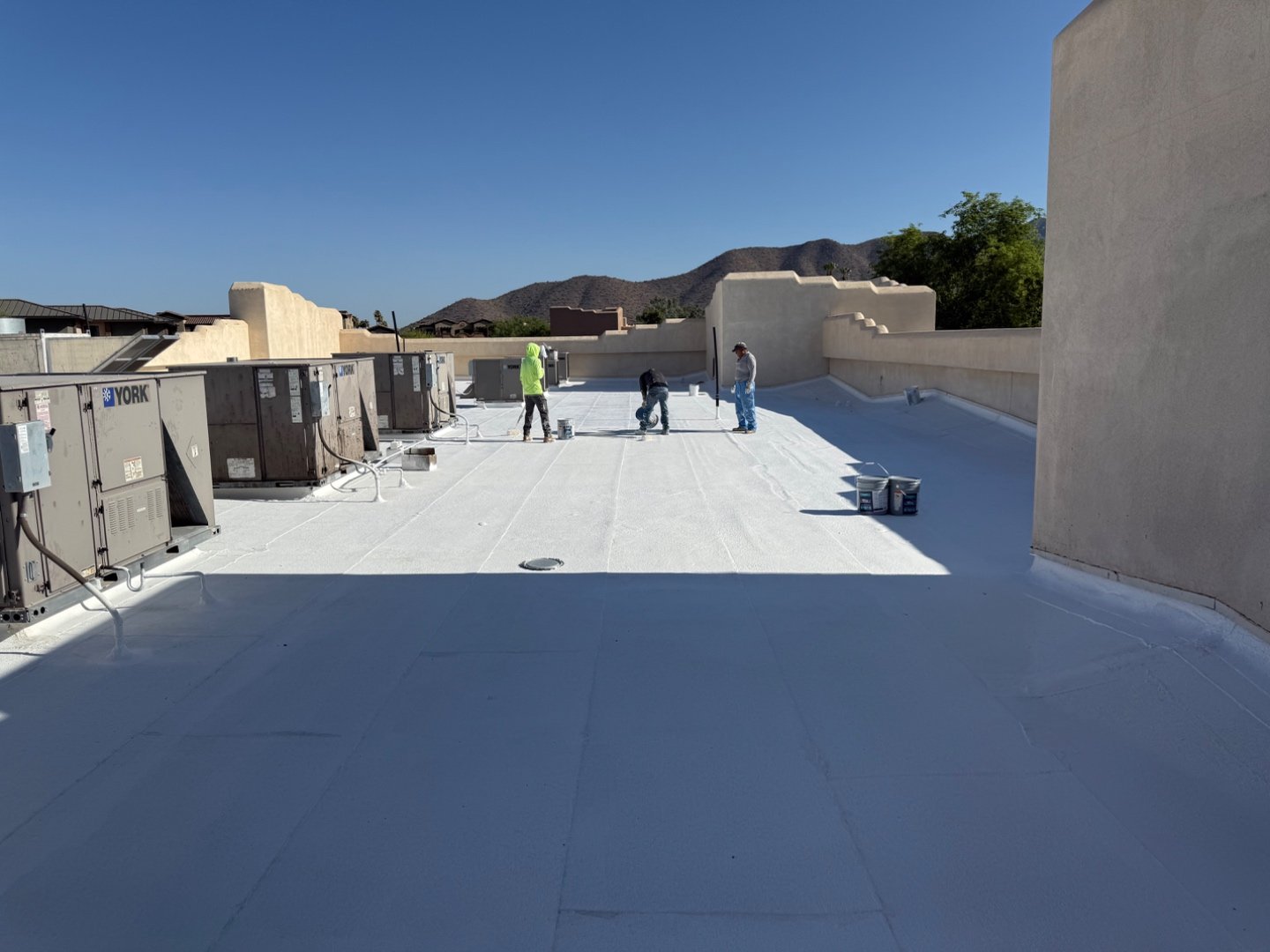
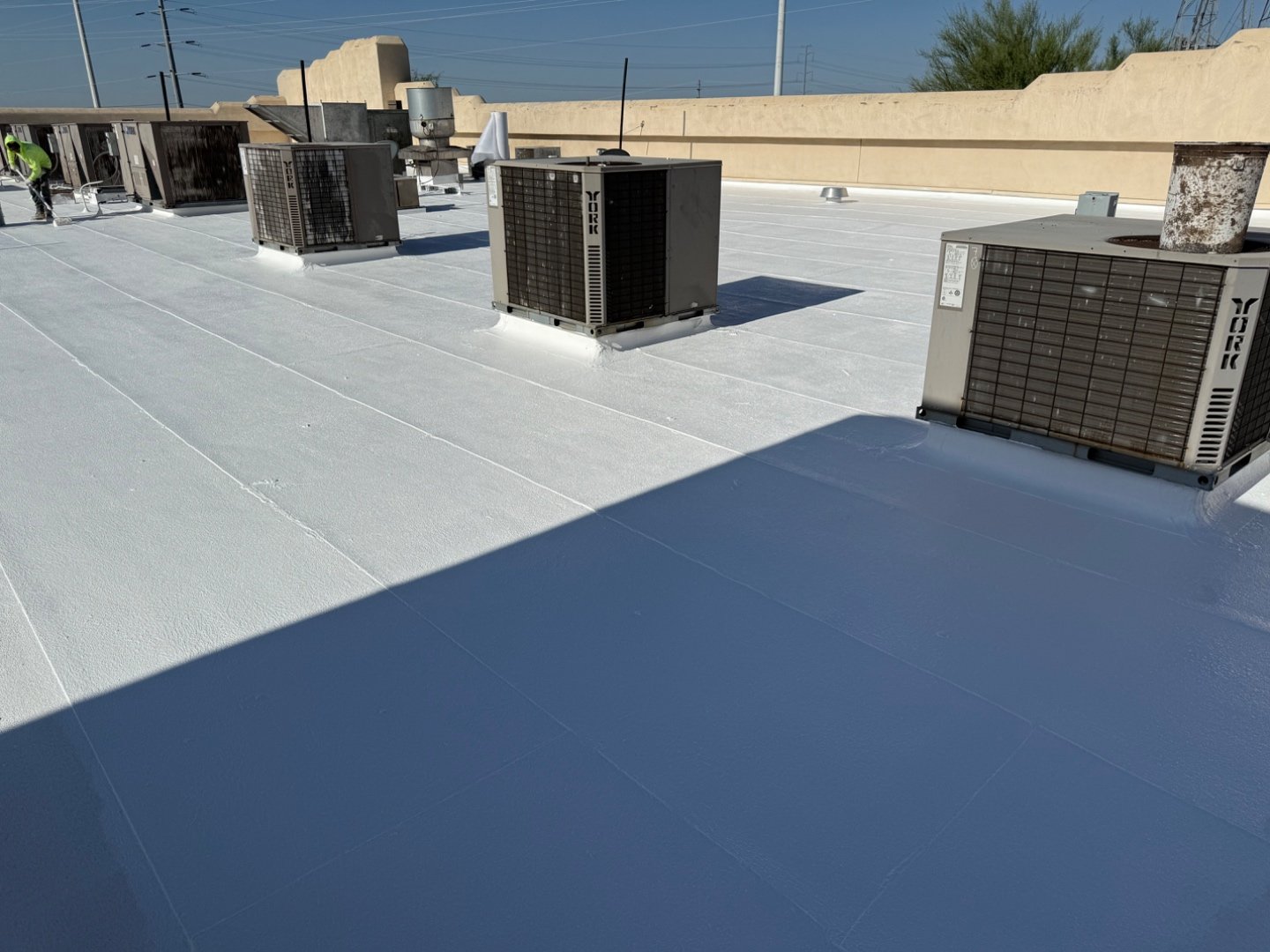
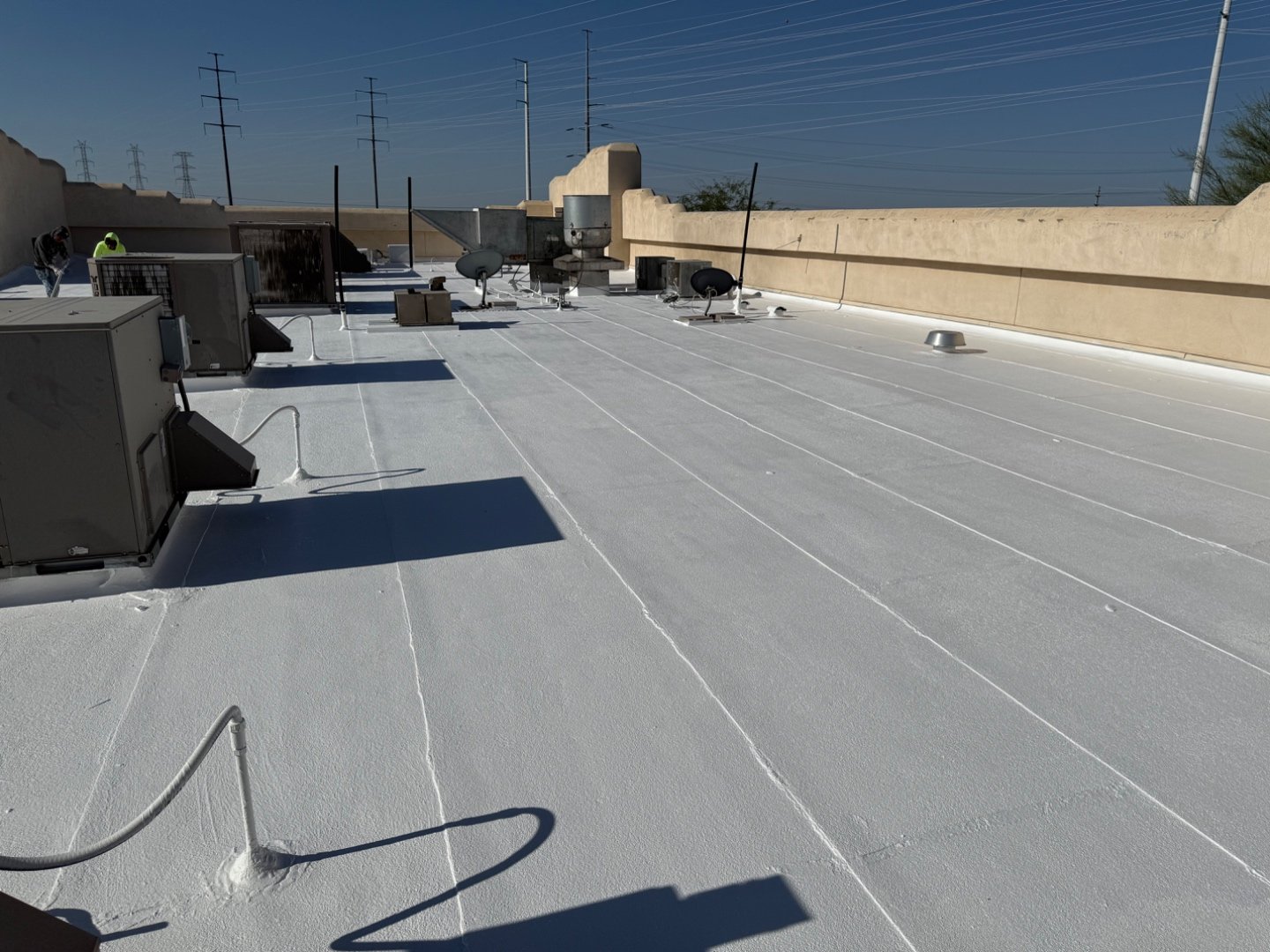
- Top coat the entire roof with TRC white silicone roof coating — the finished bright-white surface that shows in the "after" photos.
- Clean up and dispose of every bit of jobsite debris. The parking lot looked the same on our last day as it did the morning we pulled in.
The SystemWhy ArmorCoat AC100 + TRC silicone instead of one product
Every product rep will tell you their single-product system is all you need. In the field, it's not that simple. On a restaurant with heavy grease exposure, three-shift HVAC cycling, and a foam substrate that had already lost its factory coating, we run a two-stack system on purpose:
- ArmorCoat AC100 base coat. Elastomeric. Bonds tightly into conditioned SPF. Seals any hairline cracks that the ArmorPutty didn't fully bridge. Gives us a uniform surface color and mil-thickness to check before the topcoat goes down.
- TRC white silicone topcoat. Handles the UV. Handles the ponding water that will inevitably show up at the low corners. Reflects roughly 85% of solar radiation when it's clean, which knocks the peak roof-surface temperature down about 40–60°F versus a bare foam roof in July.
Together, the stack gives us a longer warranty window than either coat alone, and it holds up better under grease exposure than a straight acrylic would. Silicone alone would work too — but on a restaurant, the AC100 base is worth every dollar it adds to the bid.
BeforeBefore: worn coating, seam cracks and grease buildup
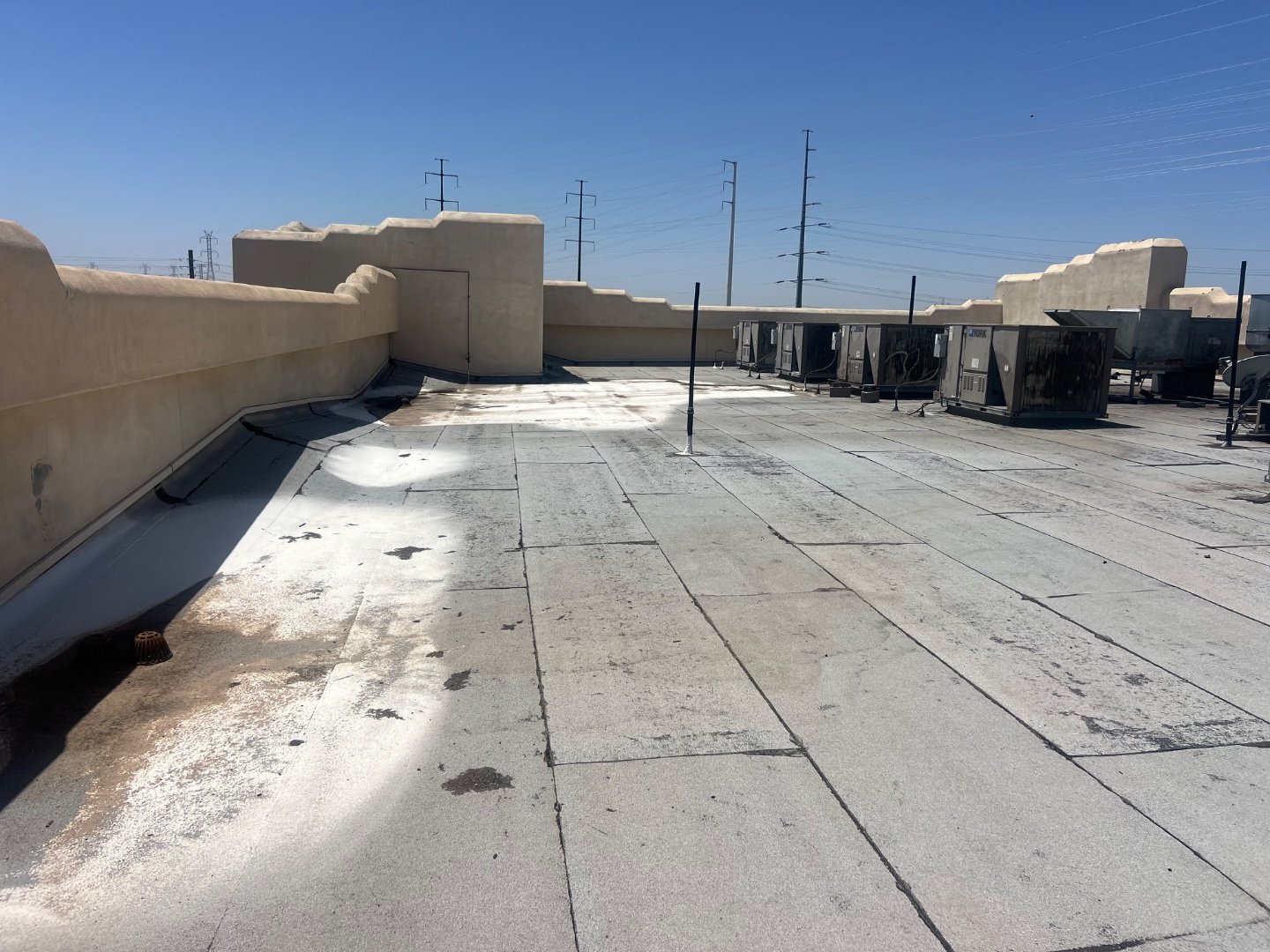
During & AfterDuring and after: TRC silicone topcoat
The ResultsThe results
- 8,755 SF — Total roof area restored — every square foot ArmorPutty-repaired, AC100 base-coated, and TRC silicone top-coated.
- 0 days — Restaurant service days lost during the project. Prep and coating sequenced around opening hours.
- ~85% — Solar reflectance of the finished TRC silicone topcoat when clean — meaningful load reduction on rooftop HVAC.
- 40–60% — Approximate cost savings versus a full foam tear-off and replacement on a building this size.
Warranty coverage
The TRC silicone material carries the manufacturer's coating warranty. Vanguard Roofing AZ provides a separate workmanship warranty on the ArmorPutty repairs, AC100 basecoat, and TRC topcoat installation.
Annual courtesy inspection is included — we come back once a year and walk the roof so any HVAC-related punctures or grease-trap issues get caught before they turn into leaks. This is the single most valuable thing a commercial roof owner can do, and yes it's included in the price.
Owner AdviceWhat we'd tell another restaurant owner considering this
If you own a Phoenix-area restaurant with a foam roof that's more than five years past its last coating, this is the honest conversation to have. Foam is one of the best insulating substrates for our climate — it's not the enemy. The coating is what wears out, and it wears out on a schedule you can predict. Miss it by two years and you're still restoring. Miss it by five and you're tearing off.
Get an inspection while the foam is still tan and dry. Not once it's brown and soft.
Questions on your building? Call Robert directly at (602) 818-5791 or use the free inspection form.
FAQCommon questions
What was the scope of the Cold Beers & Cheeseburgers Scottsdale roof project?
8,755 square feet of foam roof restoration: full degrease, clean, crack and hole repair with ArmorPutty and reinforcing membrane, one base coat of ArmorCoat AC100 elastomeric, and one topcoat of TRC white silicone. Full teardown of the substrate was not required — the underlying SPF was structurally sound.
Why coat with ArmorCoat AC100 first and TRC silicone on top instead of a single-product system?
The AC100 elastomeric base bonds tightly to conditioned SPF, seals any hairline cracks the ArmorPutty didn't fully bridge, and gives the silicone topcoat a uniform surface to key into. Silicone alone can bond to foam, but the two-coat stack extends warranty life and improves long-term ponding-water resistance — critical for a restaurant with heavy grease-trap and HVAC penetrations.
Why not tear off and replace the foam?
Tear-off wasn't necessary. A restoration on this size building runs 40–60% less than a full replacement, requires no dumpsters or overnight closure, and — because the SPF was still delivering R-6.5 per inch of insulation — kept the restaurant's cooling bills where they were. Tear-off is the right call when foam is saturated or delaminated. This roof wasn't there yet.
How do you do a full roof restoration while a restaurant is open?
Careful sequencing. We scheduled loud prep work (degreasing, power washing) before opening hours, staged material lifts on the side away from patio dining, and covered grease-trap and kitchen exhaust intakes during coating passes so nothing pulled solvent smell into the dining room. The restaurant did not close a single service day.
What warranty applies to this Scottsdale foam restoration?
TRC's silicone system is warrantied against material defects, and Vanguard Roofing AZ provides a separate workmanship warranty on the installation. The restaurant owner also receives an annual courtesy inspection to catch any HVAC-related punctures early — that's the single biggest failure point on commercial silicone roofs in Arizona.